A rectangle body shape can make getting dressed wonderfully straightforward: shoulders, waist, and hips often create a clean, even line, and many garments hang exactly as they were designed to hang. The only snag is that generic advice can push you toward forced curves, belts that never stay put, or layers that feel like a costume. A better approach is to decide whether you want definition, length, softness, or simply an easy outfit, then use cut and texture to get there.
Understand the line before trying to change it
A rectangle shape usually means the shoulders, waist, and hips are similar in width, with less dramatic indentation at the waist. It says nothing about height, bust, muscle, size, or how feminine your style is. Some people with this shape have long legs and a short torso; others have a straight frame with a full bust. The most useful observation is where clothes naturally fall when they are not pulled, tucked, or cinched.
Create definition with placement, not pressure
Put on a plain fitted tee and your most neutral jeans, then step back far enough to see the whole outline. You may like the clean vertical line and want to emphasize it. Or you may prefer a little waist placement and more contrast between top and bottom. Both choices are valid. The mistake is assuming a rectangle body shape must always be made to look like an hourglass. Personal style is allowed to be more interesting than a diagram.
Use dresses and skirts for the amount of softness you want
Fit still comes first. If a dress is tight at the ribcage but loose at the waist, a belt will not repair the pattern. If trousers fit the hips but twist at the side seam, extra pockets and pleats will only add noise. Notice the construction issue before you add styling tricks; it saves money and prevents a wardrobe full of almost-right pieces.
A belt works when it marks a place you actually enjoy being marked. Try it at the natural waist, slightly above it, and lower on the hip with the same dress. The best position is not always the narrowest part of your body; it is the one that keeps the torso in proportion and still feels comfortable after sitting down. A medium-width leather belt or a fabric tie usually gives more control than a tiny belt that disappears into the outfit.
Waist placement can also come from seams, tucks, and contrast. A wrap-style top, a shirt tucked with a little looseness, or a cardigan buttoned only around the waist can create an impression of shape without compressing anything. Peplum tops are another option, especially when the flare begins gently and the fabric has enough weight to hold its line. A very stiff peplum can look separate from the body; a softer one tends to move more naturally.
Keep the rest of the outfit simple when one item is doing the shaping. A belted dress needs little more than shoes and perhaps a jacket. A top with ruffles at the waist pairs well with straight trousers. When every garment has a tie, a pleat, a gathered sleeve, and a contrasting panel, the eye does not know where to rest.
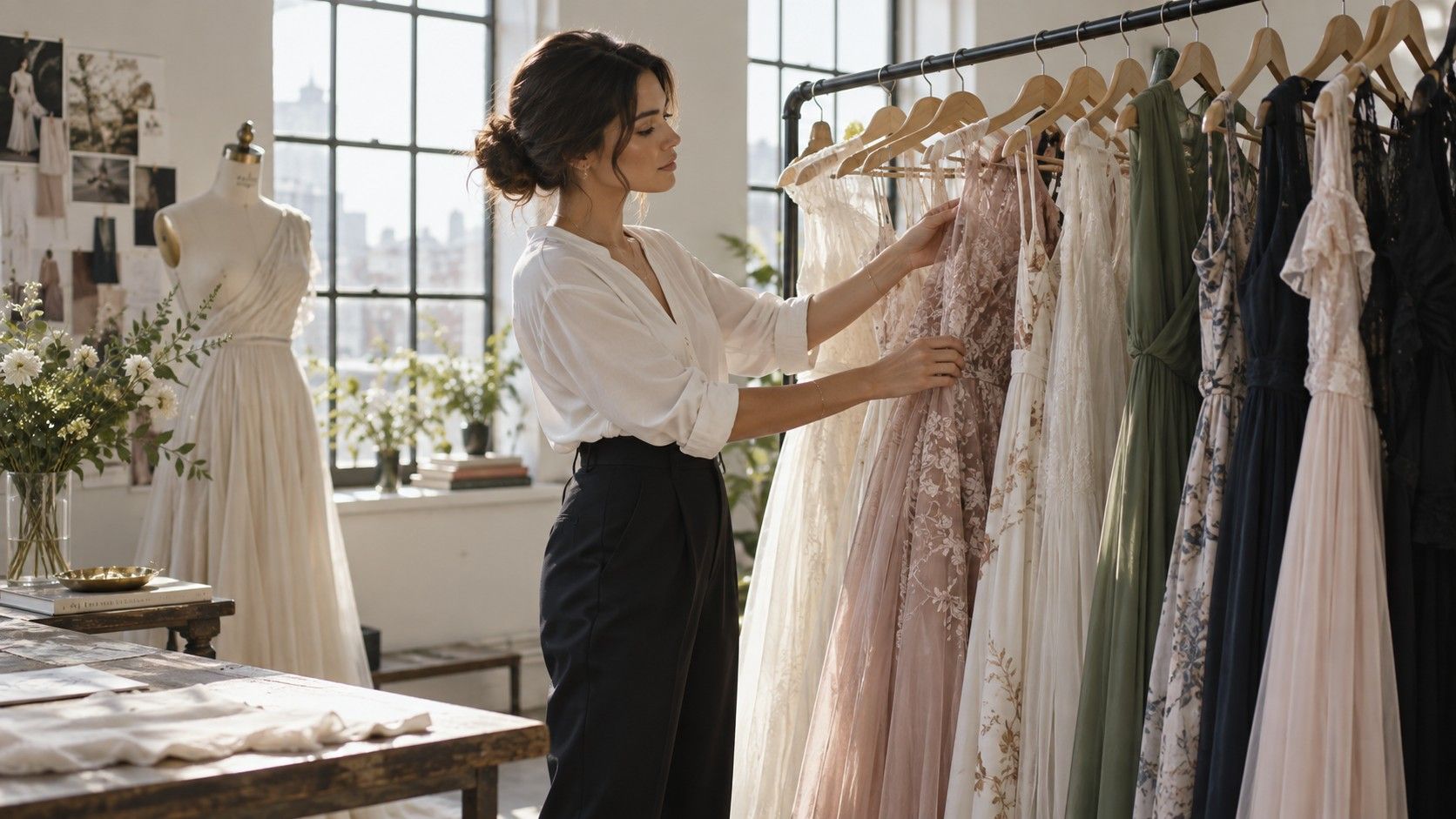
Fit-and-flare dresses are an obvious choice for a rectangle shape, but they are not the only one. A shirt dress with a removable tie offers flexibility: wear it loose for a long vertical line, then add the tie when you want more definition. A slip dress can be elegant with an open cardigan or cropped jacket. A shift dress in textured fabric can look deliberately minimal instead of plain, especially with a square neckline or an interesting sleeve.
For skirts, consider what happens at the waist and what happens at the hem. An A-line skirt adds shape through the lower half and works nicely with a tucked knit. A pleated midi creates movement, but check that the pleats begin below the waistband; too much bulk at the top can make the skirt look like it is wearing you. A straight skirt with a slit is a good counterpoint if you prefer a cleaner column and want the shoes to do more of the talking.
| If you want... | Try this | Watch for this |
|---|---|---|
| Gentle waist definition | Shirt dress with a soft tie | A tie that slips upward all day |
| More movement | Pleated midi with a neat knit | Pleats opening too much at the waist |
| A long clean line | Column dress with an open layer | A layer ending at an awkward mid-hip point |
| More texture | Textured skirt with a smooth top | Competing ruffles or heavy fabric in both pieces |
Do not judge a dress only from the front. Turn sideways, sit in it, and look at the back seam. A good shape should be visible without needing a rigid pose. If the garment creates an attractive line only when you hold your breath, it is probably not the easy piece you hoped it would be.
Pair jeans and tops with a clear visual plan
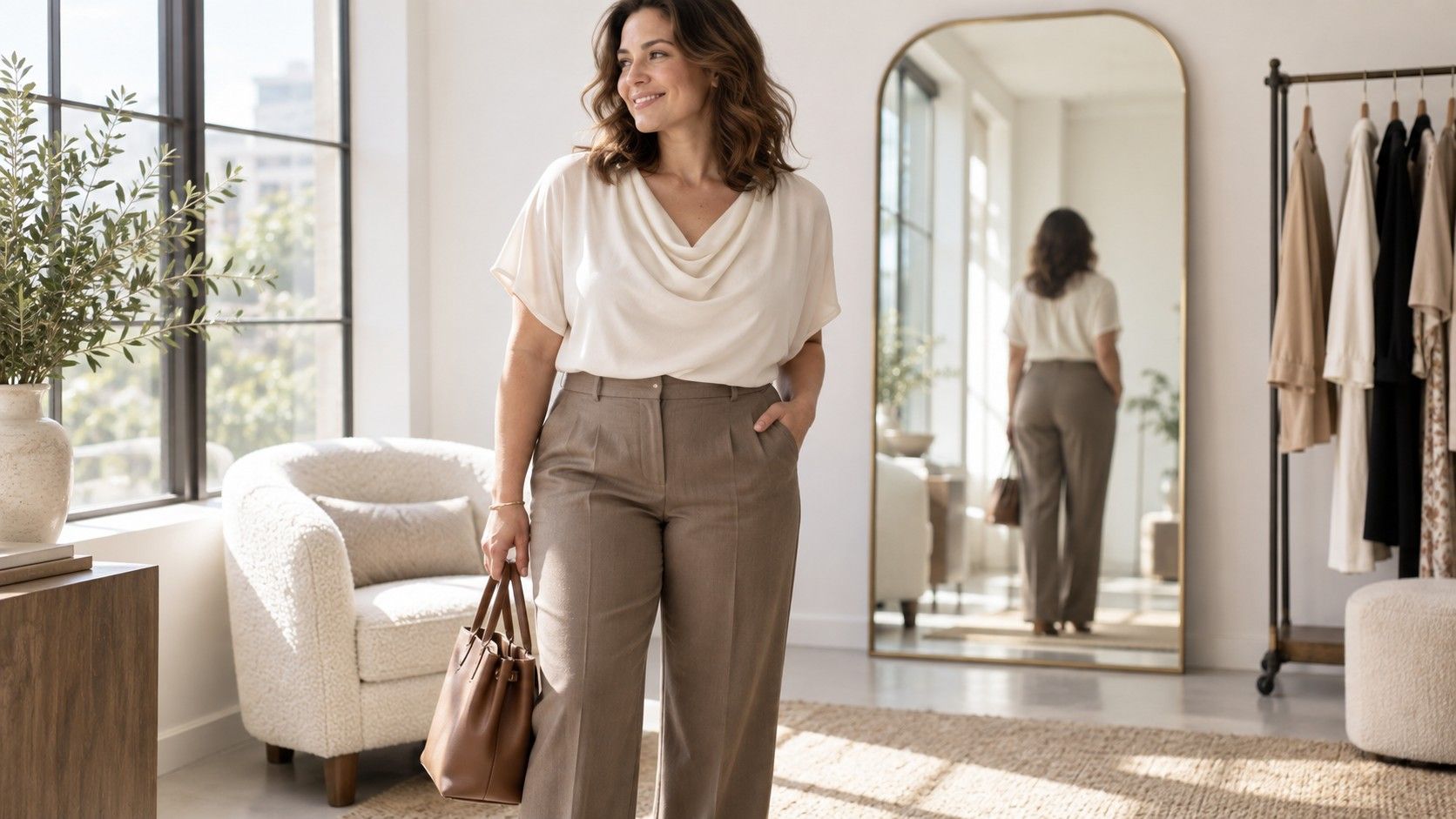
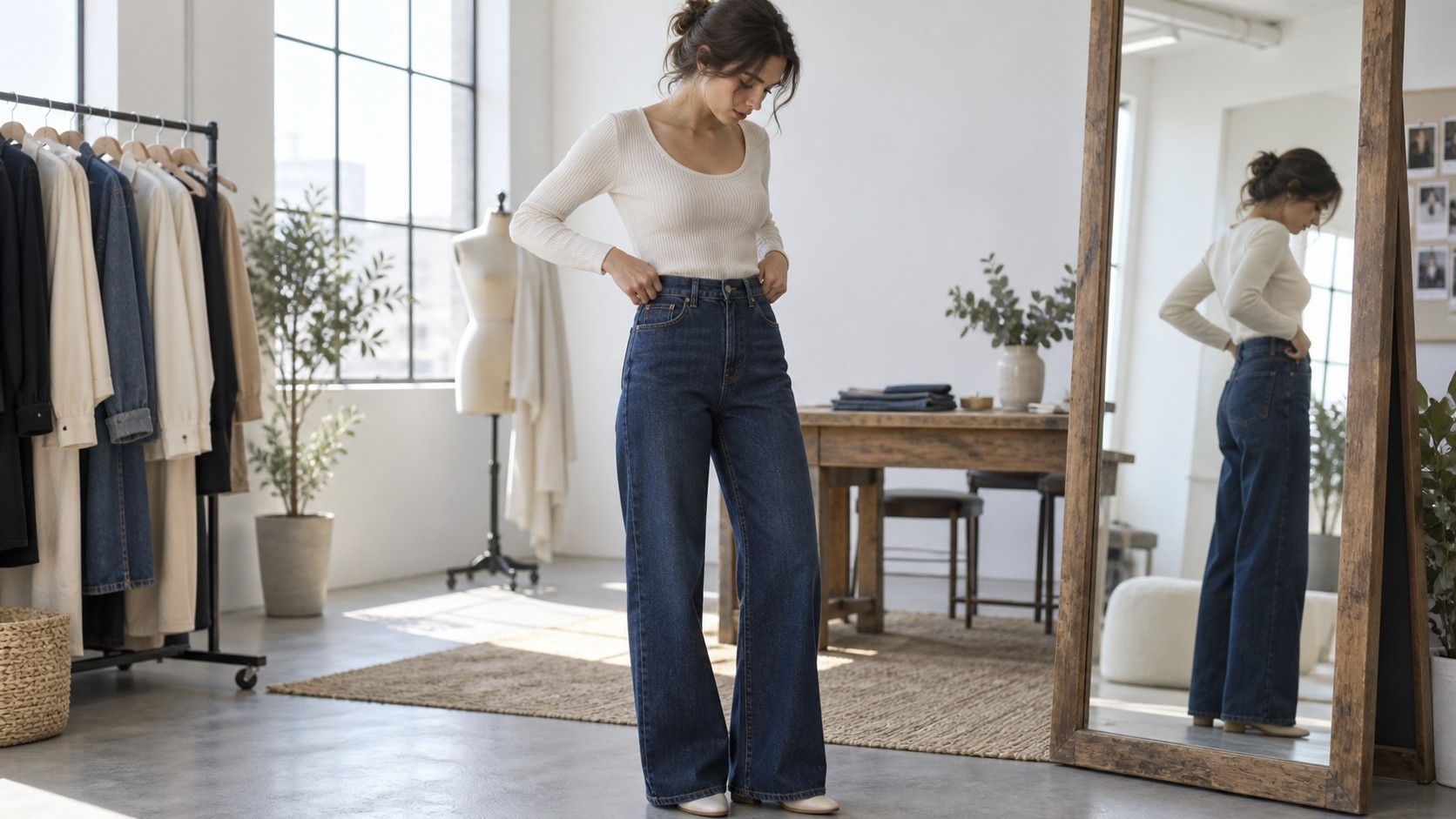
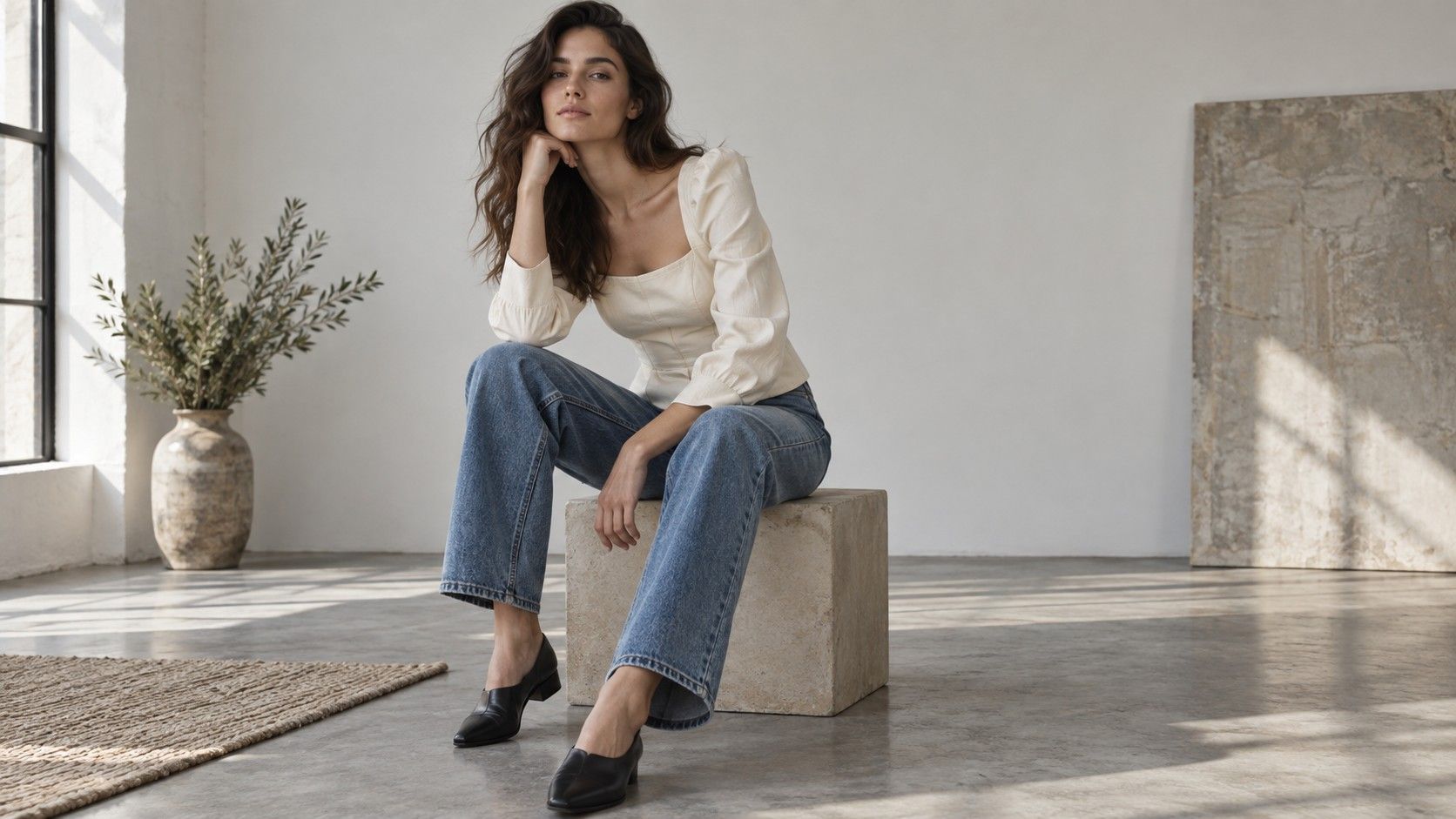
Rectangle body shape outfits often look especially good with contrast in texture or volume. Straight jeans with a ribbed knit, relaxed denim with a tucked-in shirt, or wide trousers with a close-fitting tee all create interest without requiring dramatic curves. The point is not to make the top huge and the bottom tiny. It is to let one side of the outfit have a little more shape while the other provides a stable line.
High-rise jeans can create a waist moment if you enjoy tucking in tops, while mid-rise styles keep the torso longer and are often easier with untucked shirts. Test both with the same footwear. A cropped wide jean may look balanced with a boot but make the leg line feel abruptly cut with a trainer. That is not a body-shape failure; it is a proportion decision that changes with a few centimeters of hem.
Necklines and sleeves are useful finishing tools. A square neck gives structure, a soft scoop adds roundness, and a collared shirt offers a crisp vertical opening. Try a sleeve that ends around the mid-bicep or rolls to the forearm if a very short sleeve makes the upper body feel too straight. These are small adjustments, but they are far more wearable than buying a top covered in decorative details you do not like.
Layer with intention and keep your own style visible
Layering can add depth to a straight frame quickly. An open blazer creates two vertical lines and a bit of shoulder structure; a cropped denim jacket marks the waist; a long vest keeps the column effect while changing the texture. The useful question is where the layer ends. A jacket that stops near the waist creates a break. One that reaches the thigh creates length. Try both over the same base outfit before deciding which is more flattering.
Texture is another quiet way to make a rectangle shape feel dimensional. A bouclé jacket over a smooth tee, suede boots with denim, or a knitted vest over a crisp shirt gives the eye contrast without adding literal volume. If you prefer monochrome outfits, this approach is especially helpful: different surfaces keep an all-black or all-navy look from feeling flat.
Finally, let the style lead. A sharp tailored suit, a floaty printed dress, and a minimal tee-and-jeans uniform can all suit a rectangle body shape when the fit is sound. Keep photos of outfits that make you stand taller, note the rise and hem lengths that work, and ignore any advice that asks you to perform a silhouette you do not want. Definition is an option, not an obligation, and the best outfit is the one you will happily wear again.