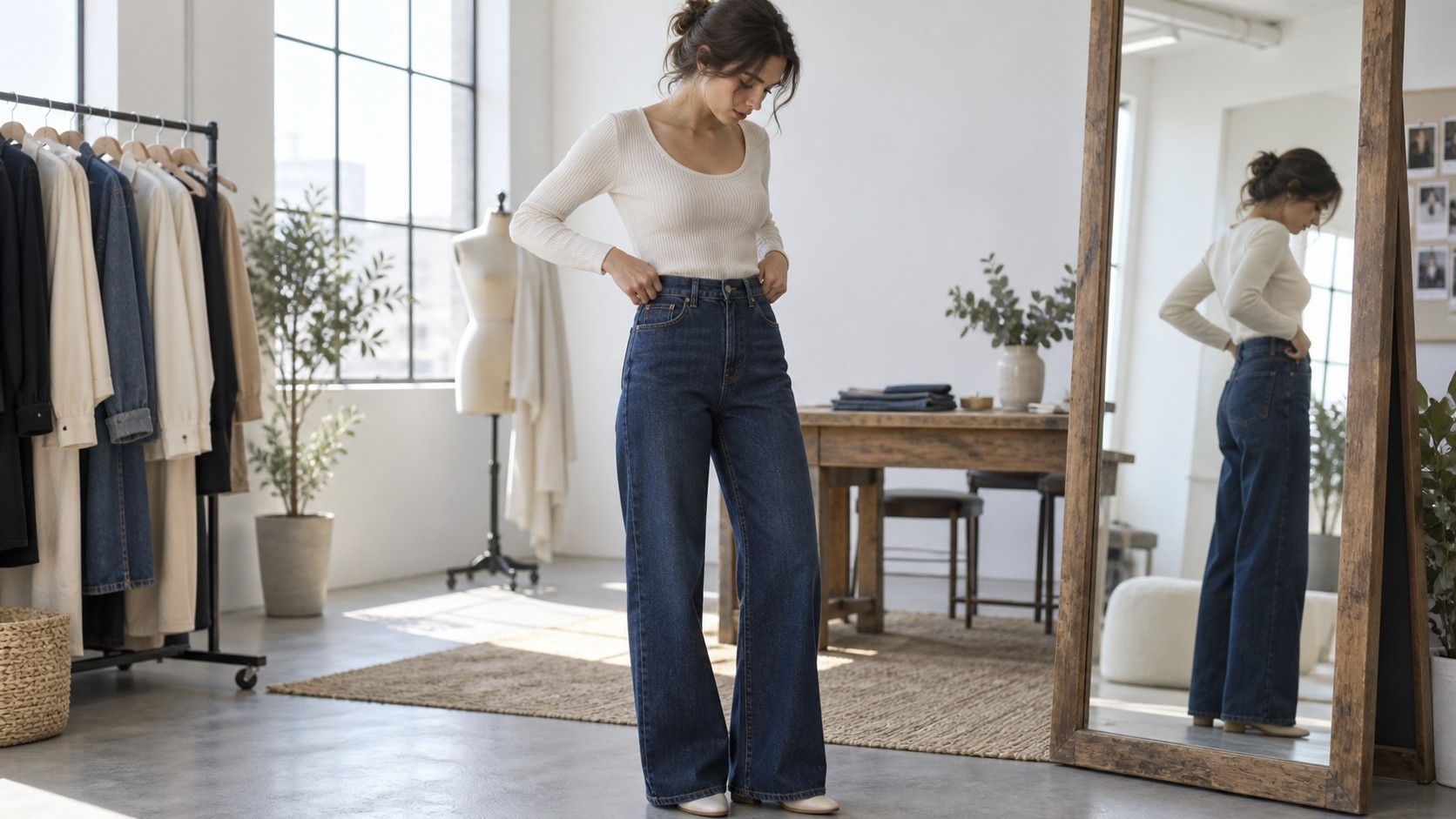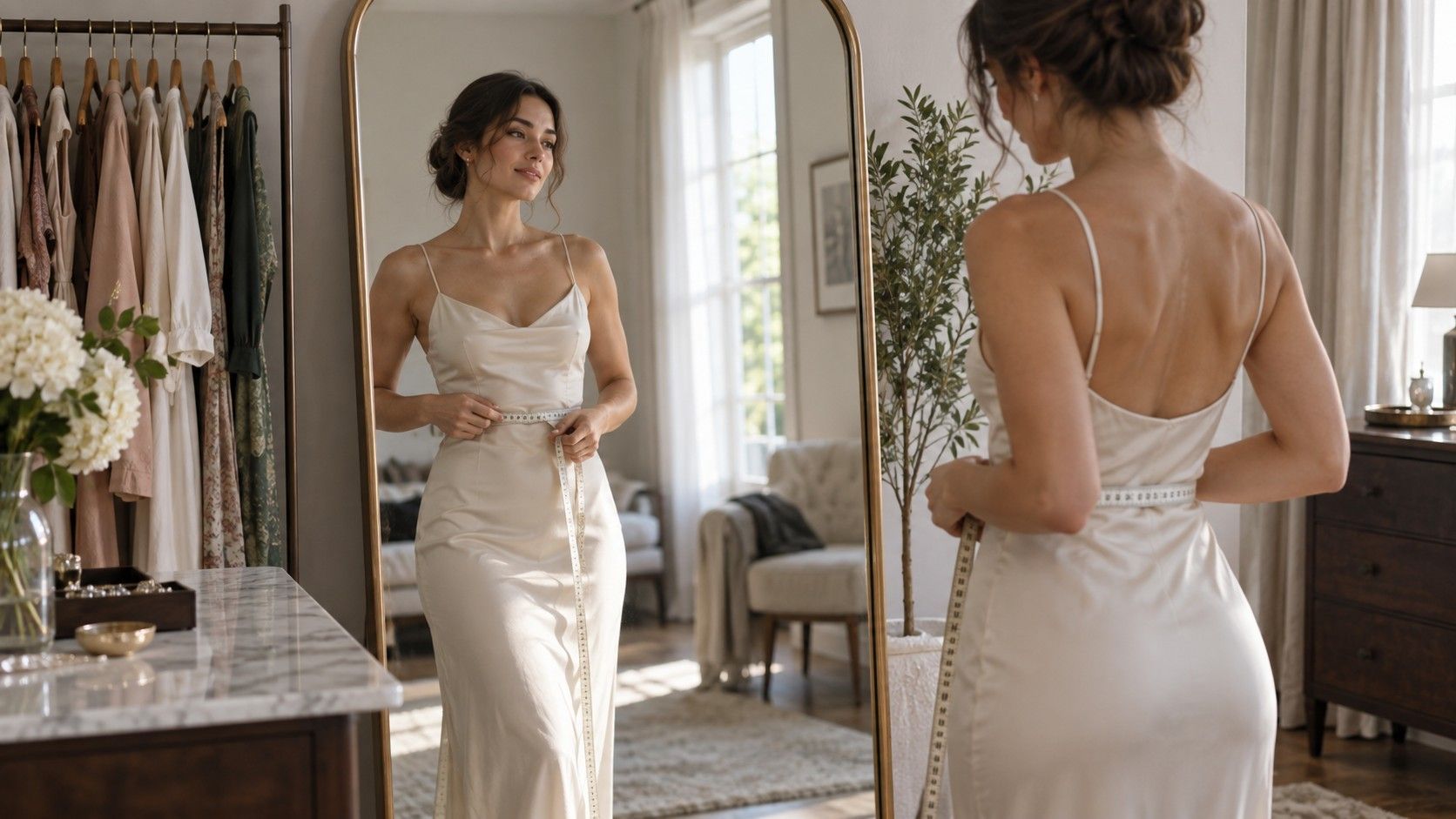
The best dress shapes for body types are less about obeying a chart and more about noticing where a garment sits, moves, and pulls. A flattering dress is one you can forget about after leaving the mirror: the neckline stays put, the waist does not climb, and the skirt gives you enough room to walk, sit, and breathe. Use body shape as a useful clue, then let fit and comfort make the final call.
Start with the places a dress actually has to fit
Before naming your body shape, look at the bodice. The shoulder seam should land near the outer edge of your shoulder instead of sliding down your arm or pinching toward your neck. Then check the bust, ribs, waist, hip, and upper thigh separately. A dress can skim beautifully through the waist and still feel wrong because the armholes cut in or the back pulls when you reach for a bag.
Read the waist seam before you read the size tag
Try a quick movement test in the changing room. Sit on a low chair, lift both arms, take several ordinary steps, and turn sideways. If the front hem rises sharply, the skirt may be too narrow or the rise of the waist seam may be wrong for your torso. If you keep tugging the neckline upward, a different cut is usually a better answer than a larger size. This small test is more reliable than a label saying one shape is meant for you.
Compare common dress silhouettes by what they do in motion
A waist seam changes the visual balance of a dress more than many prints or accessories do. An empire seam begins below the bust and can feel easy on days when you want less contact around the midsection, but it needs enough room across the bust or it can look strained. A natural waist seam works well when it lands at your actual narrow point. When it sits two inches above or below that point, even a well-made dress can feel borrowed.
People with a shorter torso often find that a high waist makes their legs look longer, while people with a longer torso may prefer a dropped waist only when the hip area has enough ease. There is no universal rule: a defined waist can be created by a wrap tie, a seam, a belt channel, or the contrast between a fitted top and a fuller skirt. The useful question is whether the definition feels intentional rather than restrictive.
| Dress shape | What it tends to do | Useful fitting check |
|---|---|---|
| A-line | Follows the upper body, then widens gradually from the waist or hip. | Make sure the skirt does not begin so high that it adds bulk at the ribs. |
| Wrap dress | Creates an adjustable waist and diagonal line across the torso. | Check that the overlap stays closed when seated and the tie does not ride up. |
| Shirt dress | Gives a straighter vertical line and can be shaped with a belt or left loose. | Look for gaping at the buttons and enough room through the upper back. |
| Fit-and-flare | Defines the bodice, then gives the skirt more swing. | Test the waist placement and make sure the skirt clears your hips when walking. |
| Column or slip dress | Skims in a long, close line with little built-in structure. | Check the fabric at the hip and thighs under normal daylight, not only fitting-room light. |
An A-line dress is often recommended because it gives the skirt a clean path away from the body without needing a stiff petticoat. That makes it one of the most flexible dresses for body shape, especially when the bodice can be altered. A subtle A-line is different from a very full circle skirt: the first reads calm and practical, while the second makes more movement and may shift attention lower on the body.
A wrap dress earns its reputation because the tie gives you adjustment on changing days. Still, not every wrap dress is equally forgiving. A thin jersey wrap can twist at the waist, and a shallow overlap can expose more than you expect when you sit. Look for an inner tie, enough fabric across the bust, and a neckline that feels secure without a safety pin. The best version is not necessarily the most fitted one; it is the one that stays composed through an ordinary day.
Choose skirt shape with your stride in mind
Skirt shape affects comfort as much as appearance. Pencil skirts and narrow columns can look polished, but a lining with no stretch may shorten your stride and make you take careful little steps. A slit can solve that problem, although its placement matters: a back slit is discreet, a side slit opens as you walk, and a front slit makes the leg line more visible. None is better in the abstract; the right choice depends on where you plan to wear the dress.
Fuller skirts change with fabric drape. Crisp cotton holds a clear outline, while viscose and lightweight crepe fall closer to the legs. If you want volume without a costume-like effect, choose a skirt that begins with small gathers or soft pleats rather than deep, dense gathering at the waist. When trying it on, watch the fabric after you turn around. A skirt that looks balanced from the front but sticks out at the back may simply need a different fabric weight.
Use necklines and sleeves to balance the upper body
A dress silhouette includes the area above the waist. A V-neck adds an open vertical line, while a scoop neck softens the transition from shoulder to chest. Boat necks and wide square necks can make the shoulder line look more horizontal, which some people enjoy and others find too broad. The difference is easy to see in a mirror if you pull your hair back and stand a few steps away instead of judging the garment from inches away.
Sleeves deserve the same attention. A cap sleeve ending at the widest part of the upper arm can feel fussy; a sleeve that ends a little above or below that point often feels cleaner. Puff sleeves add structure around the shoulder, whereas a soft dropped sleeve relaxes it. If your dress has a dramatic sleeve, keep the waist and skirt simple on the first try. Too many competing shapes make it hard to tell which detail you actually like.
Layer a dress without losing its useful line
Layers can rescue a dress that is almost right. A cropped cardigan preserves a raised or natural waist, while a long open layer extends a vertical line over a straighter dress. A blazer with a defined shoulder can sharpen a soft slip dress; an oversized blazer can be comfortable but may hide the waist seam you chose on purpose. Put the outer layer on while the dress is still buttoned, tied, or belted as you would wear it outside.
Belts work best when they cooperate with the construction. Threading a wide belt over an empire seam can bunch fabric under the bust, while a narrow belt on a shirt dress can give shape without changing the garment's balance. If you often remove a belt halfway through the day, treat that as information. A dress that needs constant styling equipment may not be the dress shape you reach for most.
Make the final choice on a normal-day test
When choosing a dress shape, imagine the setting honestly: a train ride, a lunch where you will sit for an hour, a humid afternoon, a meeting with a laptop on your knees. A fitted sheath may be ideal for one of those situations and irritating for another. Fabric with a little give can help, but stretch is not a substitute for enough room through the body. A dress should not require you to hold a particular posture to look good.
Take two mirror photos if you can: one standing still and one while walking or sitting. The second photo often shows whether the hem twists, the waist rides up, or the neckline has shifted. Over time, note the dresses you wear repeatedly. Their shared qualities—perhaps a clear shoulder line, a gentle waist seam, or a skirt with movement—are a more personal guide than any body-type rule. That is how to choose a dress shape that keeps working long after the fitting room.