Pear body shape clothing is less about disguising hips and more about making an outfit feel intentional from shoulder to shoe. If trousers fit beautifully but a top seems to vanish beside them, or a dress pulls at the hip while floating at the bust, the problem is usually proportion and construction rather than your body. A few fit checks make shopping calmer and leave room for the colours, textures, and moods you actually enjoy.
Start with the proportions you are actually dressing
A pear shape commonly has hips that are noticeably wider than the shoulders or bust, with a waist that is fairly defined. That description is a starting point, not a uniform. Some people have rounded hips and a compact upper body; others have a fuller bust as well, but still find that skirts and trousers determine the size they buy. Stand in front of a mirror in close-fitting clothes and look at the shoulder line, waist, and widest point of the hip. That is more useful than trying to force a tape-measure result into a category.
Use tops to create a clear starting point
The practical aim is simple: give the upper half enough presence that it does not look accidentally underdressed next to the lower half. Presence can come from a clear neckline, a sleeve with a little shape, an interesting collar, or colour near the face. It does not require oversized shoulders or a busy print. I find the most convincing pear shape outfits are the ones where the eye moves naturally upward before it notices the jeans, rather than ones that seem to be following a rulebook.
Choose trousers and skirts by their fall, not their label
Before keeping any garment, test it in motion. Sit down, lift your arms, and take ten ordinary steps. A top that rides up to the smallest part of the waist can make a balanced outfit look fussy by lunchtime. A skirt that twists toward the back seam is usually asking for a different cut or size, not more determination from you.
For many pear shapes, tops work hardest when they finish at a deliberate point. A tucked shirt, a knit that lands around the high hip, or a blouse with a gently shaped hem can all make the waist visible without gripping it. Boat necks, square necks, open collars, and soft V-necks broaden the visual field across the shoulders. The difference is subtle in a changing room, but obvious in a full-length photo.
Details near the shoulder are useful when they have structure. A crisp shirt collar, a slight puff sleeve, a horizontal stripe, or a textured knit gives the upper body a frame. The caveat is scale: a tiny ruffle can look lost, while a huge gathered sleeve may feel theatrical if the rest of your wardrobe is simple. Try the top with your most familiar straight-leg jeans, not just with the shop's sample skirt. That pairing tells you whether the proportion will survive a normal Tuesday.
Very thin, clingy jersey is not forbidden, but it often needs a companion: an open overshirt, a cropped cardigan, or a jacket with a clean shoulder seam. If you like a close-fitting tee, choose one with a substantial collar and enough length to tuck smoothly. The goal is not to add bulk. It is to avoid the visual effect of a small strip of fabric ending abruptly above fuller hips.
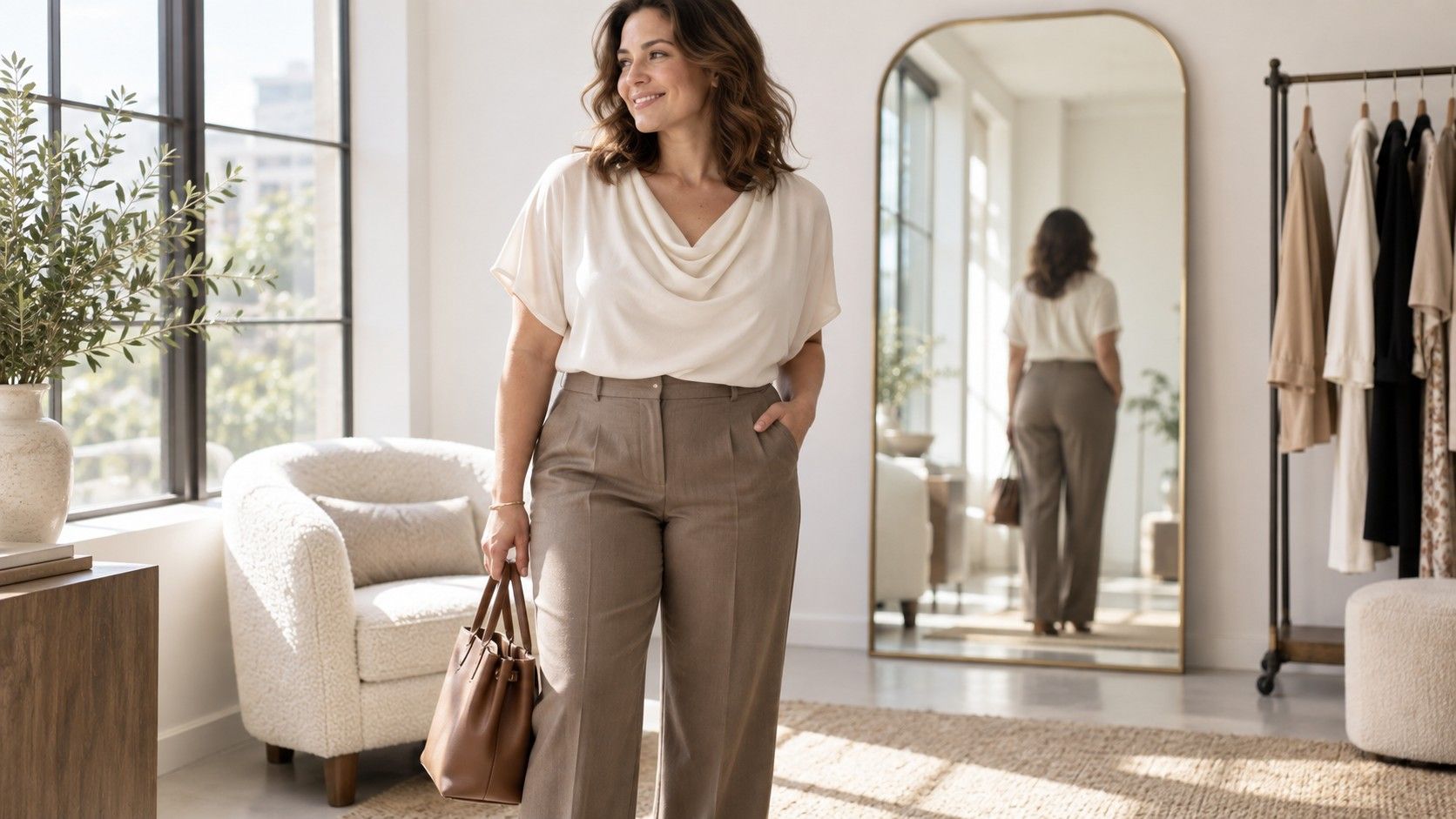
How to dress a pear shape often comes down to fabric behavior. A trouser can be called wide-leg, straight, or tailored and still fail if the front pockets gap or the cloth catches at the widest hip. Look for a smooth front, a waistband that sits flat when you sit, and enough ease through the upper thigh to let the leg hang vertically. Mid- and high-rise styles are often comfortable because they follow the waist instead of cutting across the fullest part of the hip.
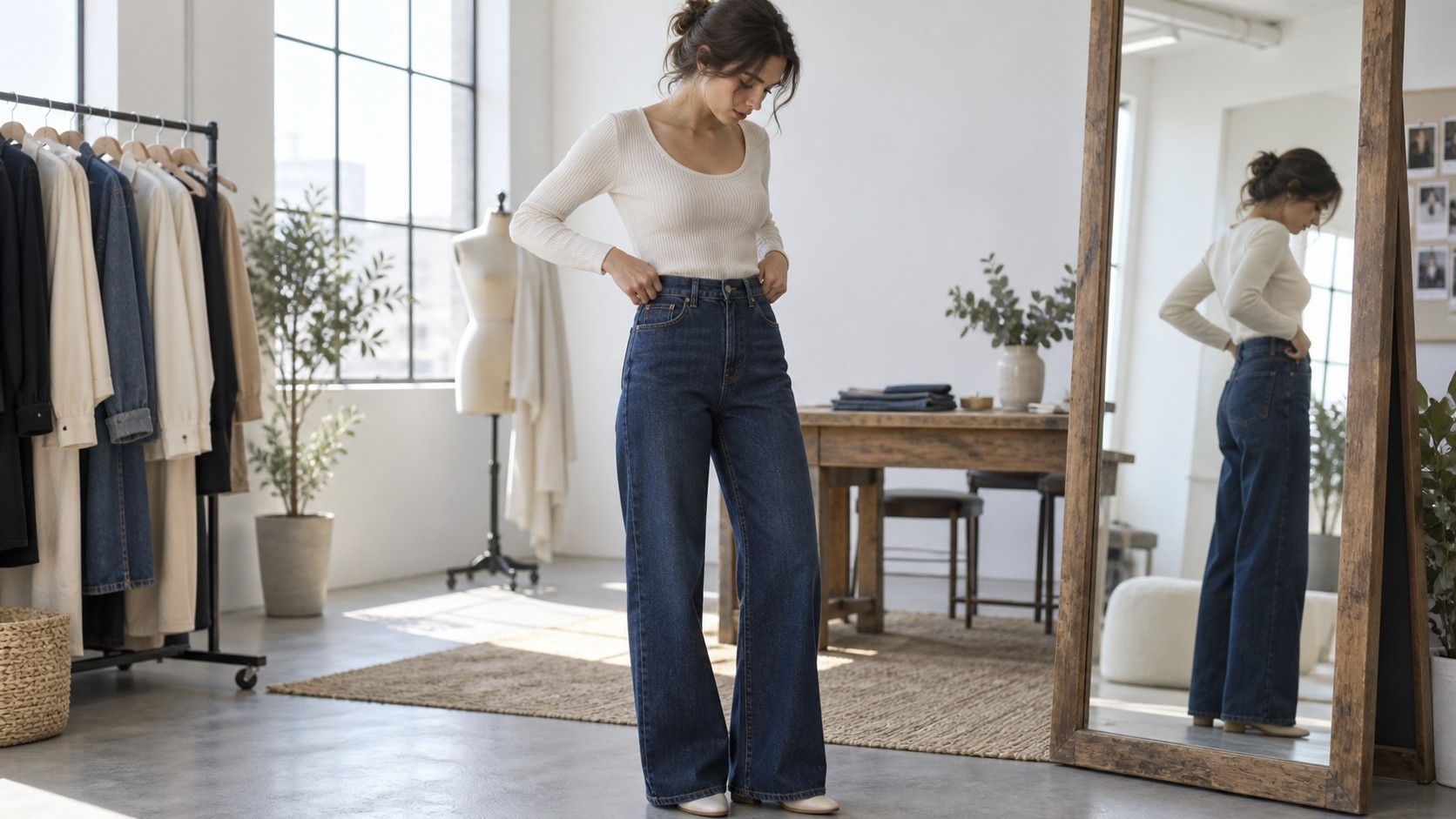
Straight-leg jeans are a dependable reference point because the line is neither glued to the leg nor dramatically flared. Dark denim can make a lower half look more continuous, but the wash matters less than the fit at the rise and seat. Check the back view as well: pockets placed very low or very far apart can change the visual balance more than a shade of blue ever will. If the waist gapes while the hips fit, a small alteration may be a better investment than endlessly sizing up and down.
| Garment | Useful check in the fitting room | Common snag |
|---|---|---|
| Straight-leg jeans | The fabric falls cleanly from hip to ankle | A tight upper thigh pulls the side seams forward |
| Wide-leg trousers | The waistband stays level while seated | Extra volume begins too high and adds width at the hip |
| A-line skirt | It skims the hip, then opens gradually | A stiff waistband cuts in and makes the skirt tilt |
| Bias midi skirt | The hem hangs evenly after a short walk | Thin fabric clings where you expected it to drape |
Skirts are often easier than trousers because the cut has room to leave the hip without negotiation. An A-line midi, a soft pleated skirt, or a bias cut can all work, depending on the fabric. Hold the waistband at your natural waist and turn sideways. If the skirt immediately forms a hard shelf at the upper hip, try a softer cloth or a seam that begins lower. Small construction choices are kinder than broad claims about what a pear shape should never wear.
Let dresses do the proportion work in one piece
Dresses are useful on mornings when you do not want to solve two garments at once. Wrap shapes, fit-and-flare dresses, shirt dresses with a real waist seam, and styles with an A-line skirt often give a pear shape a clear outline. Look first at where the waist seam sits. If it lands above your natural waist, it can make the torso look short; if it falls too low, it may pull across the hip and lose the shape that made you try it on.
A defined shoulder is helpful here too. That could be a cap sleeve with enough width, a short sleeve that ends at a flattering point on the arm, or simply a neckline that opens the upper chest. For a dress you will wear to work or an event, photograph it from the front and side under ordinary indoor light. Changing-room mirrors are forgiving, while phone photos reveal whether the skirt hangs evenly and whether the bodice is doing all the visual work.
Layers can either sharpen or blur the result. A cropped jacket ending at the waist works well with a dress because it keeps the waistline readable. A longer blazer can be excellent if it has a firm shoulder and stays open enough to create two vertical lines. What tends to feel less satisfying is a soft cardigan that ends exactly at the fullest part of the hip. It is not a fashion crime; it simply often turns a considered dress into an uncertain silhouette.
Build pear shape outfits around contrast, then soften the rules
Colour placement is an easy tool when you want a balanced outfit without changing the cut. A lighter or more textured top with a calmer trouser gives the eye a natural place to begin. The contrast need not be black and white. Navy trousers with a pale blue shirt, olive jeans with an ivory knit, or a printed blouse over dark denim all do the job. If you prefer bright trousers, balance can come from a jacket, earrings, or a stronger neckline instead.
Think in outfits, not in isolated approved pieces. A fitted black turtleneck may feel too narrow with skinny jeans but look excellent with a full skirt and a jacket. A loose striped shirt may need a neat front tuck and a straighter trouser. Keep a short list of combinations that worked on busy days: one smart outfit, one casual outfit, one warm-weather option. It is more useful than a closet full of garments bought because they supposedly flatter pear shapes.
Comfort is the final test. You should be able to eat lunch, take public transport, and forget about the waistband for an hour. A balanced outfit is not one that makes your body look less like itself. It is one that gives your shoulders, waist, hips, and personal taste an equal say. Once that is clear, pear body shape clothing becomes a practical editing exercise rather than a set of restrictions.