An inverted triangle shape usually means the shoulder line reads wider than the hips, whether that comes from your frame, muscle, posture, or simply the cut of the clothes you wear most. That is a starting observation, not a problem to solve. The useful question is what makes you feel settled when you catch your reflection: a straighter outline, a little movement around the lower half, or the clean drama of strong shoulders left completely alone.
Recognise the pattern before buying a new personality
Stand in fitted leggings and a plain T-shirt, then look at the line from shoulder to hip rather than at a tape-measure verdict. If the shoulder seam sits comfortably but your lower half looks visually narrower, you may recognise the inverted triangle pattern. A blazer with padded shoulders or a boat neck can exaggerate it; relaxed trousers can soften it in five seconds. Clothes are part of the picture.
Choose tops by where the eye lands
It helps to separate proportion from size. Two people can wear the same dress size and have very different shoulder, waist, and hip relationships. Your shape can also look different in a winter coat, after a change in activity, or when a bra fits better. There is no point in trying to pass a permanent test before getting dressed.
Let trousers and skirts do some of the balancing
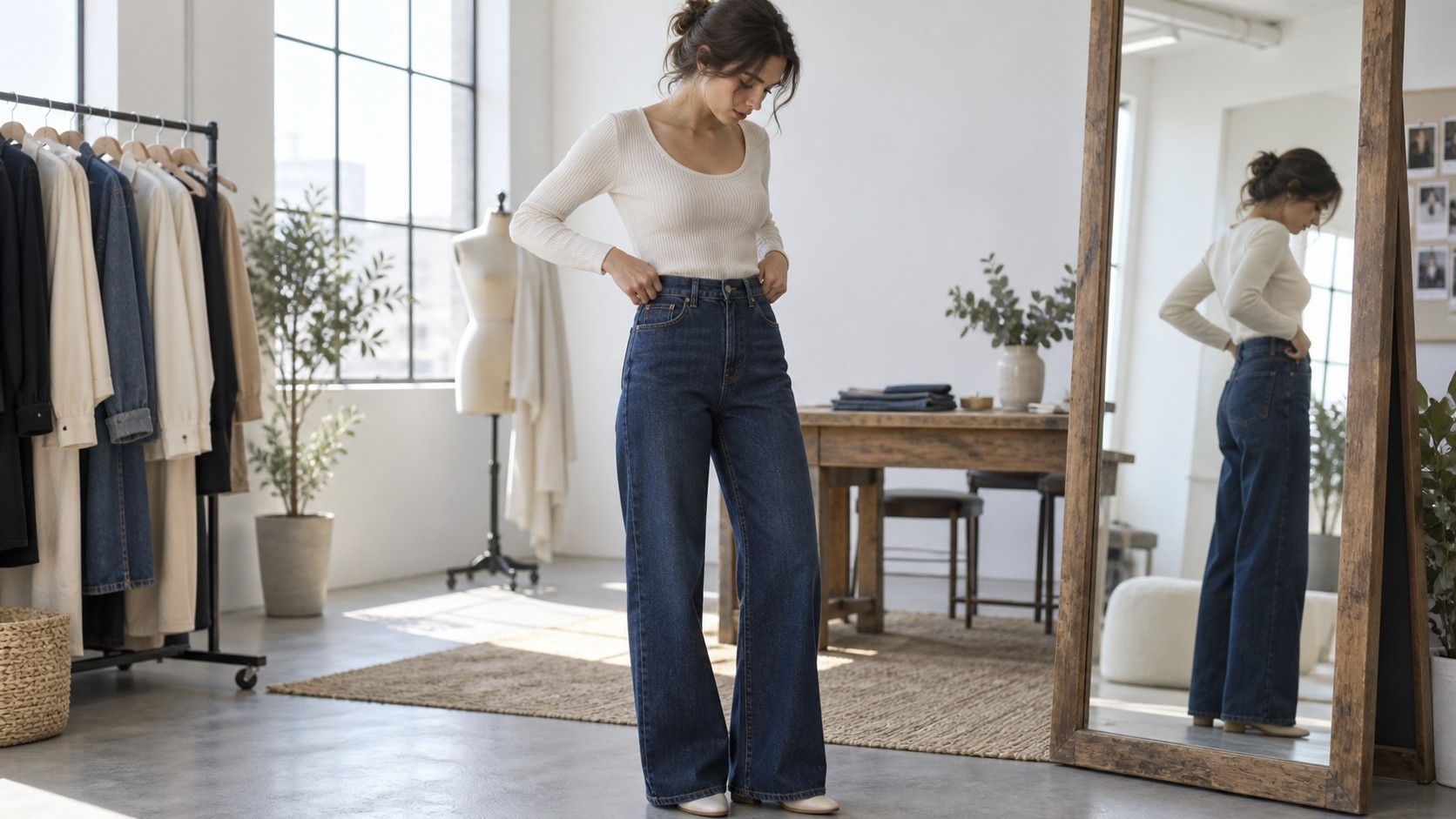
I find the most revealing check is practical: try on the same top with slim jeans, straight jeans, and wide-leg trousers. The top has not changed, but the whole outfit often has. That comparison tells you more than a label attached to one body part.
For everyday inverted triangle body shape clothing, look first at the neckline and shoulder construction. A V-neck, soft scoop, open collar, wrap front, or shirt worn with two buttons undone can create a vertical line through the centre. It is not about hiding the shoulders; it is about giving the eye somewhere else to travel. A very wide bateau neckline does the opposite, especially in a stiff knit.
Sleeves matter more than many fitting-room mirrors suggest. A dropped shoulder, raglan sleeve, or smooth set-in sleeve usually keeps the upper line calm. Cap sleeves that stop at the widest point, puffed shoulders, shoulder pads, and heavy epaulettes can make a simple top feel more formal and broader than intended. None are forbidden. They just make the shoulder line the headline.
Fabric changes the result. A drapey jersey wrap top and a crisp boxy poplin shirt may have similar measurements, yet the first follows the torso while the second stands away from it. If you love a structured jacket, try it open over a darker camisole or a column of similar colour underneath. The break in the middle is often enough.
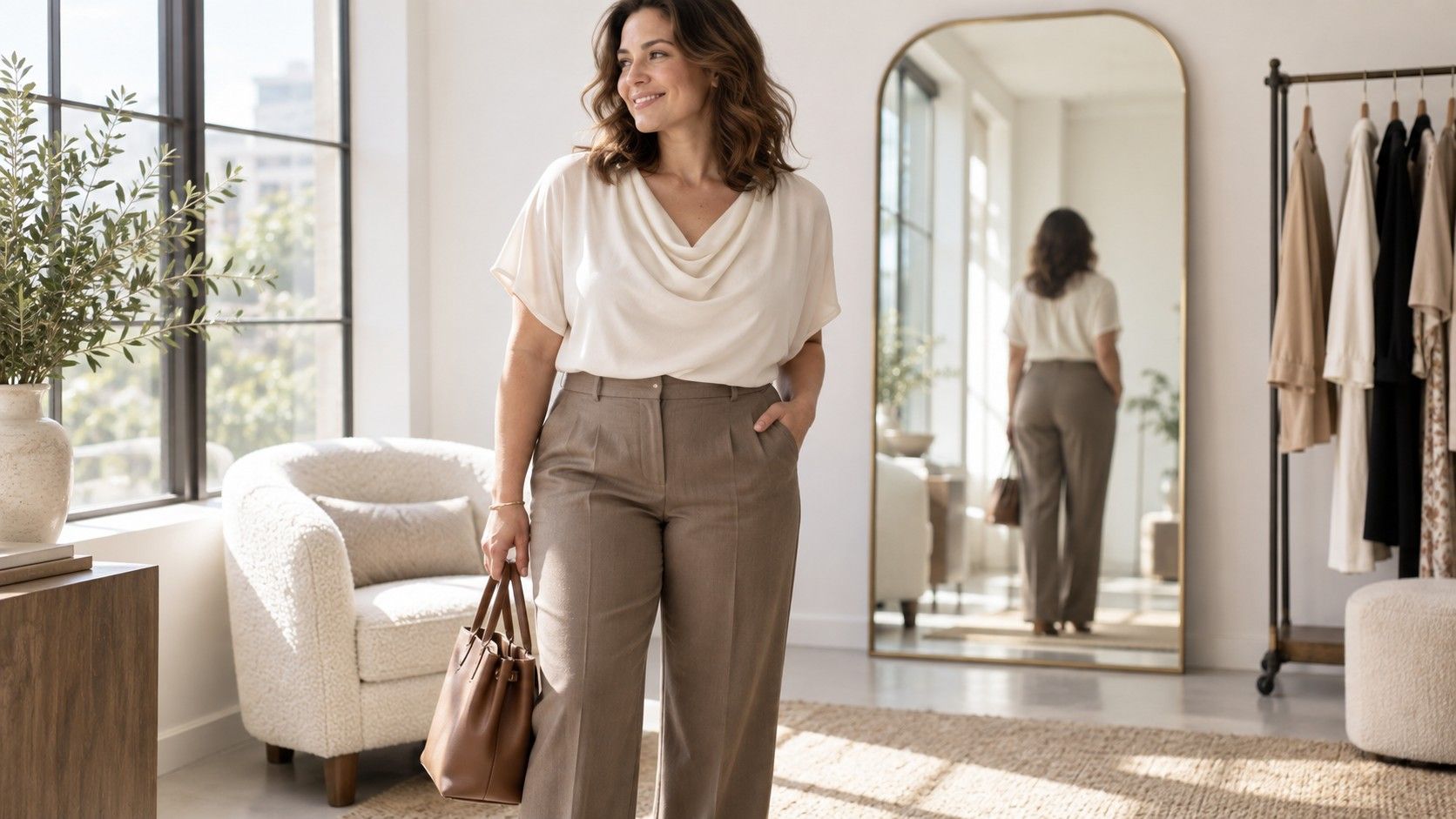
The lower half is where this shape gets a lot of useful options. Wide-leg trousers, pleated trousers, barrel-leg jeans, cargo pockets placed near the hip, and trousers with a lighter wash all add visual presence below the waist. The goal is not to manufacture hips. It is to choose an outline that feels intentional instead of top-heavy to you.
With jeans, compare the effect of a very skinny ankle against a straight or relaxed leg. A skinny pair can be excellent with an oversized sweater or long coat, but it may make a fitted shoulder detail feel sharper. A straight leg is often the quiet middle ground: easy with trainers, boots, tucked shirts, and a cropped jacket.
| Lower-half choice | What it tends to do | Useful fitting check |
|---|---|---|
| Wide-leg trouser | Creates width and flow from the hip down | Make sure the rise is comfortable when sitting |
| A-line skirt | Skims the waist and opens gradually | Check that the waistband does not twist upward |
| Straight-leg jean | Keeps the line balanced without extra volume | Look at the full-length mirror, not only the waist |
| Detail at the hip | Draws attention outward at the lower body | Choose one detail you genuinely enjoy wearing |
Skirts are worth trying even if you usually reach for denim. An A-line midi, bias-cut skirt, pleated skirt, or skirt with a visible pocket changes the proportion without feeling costume-like. The waistband is the real test. If it digs in or slides when you walk, the attractive silhouette will not survive an ordinary Tuesday.
Use dresses to create a clear centre
Dresses often make this easier because the top and bottom are already in conversation. A fit-and-flare dress, wrap dress, shirt dress with a belt, or softly gathered skirt can define a waist and then release through the hips. Look for a skirt that moves when you take a normal stride; a rigid flare that sticks out in the changing room can feel very different at a café table or on public transport.
A shift dress is not automatically wrong for an inverted triangle shape. It can look sleek and modern, especially with a low-slung longline cardigan or a coat that creates vertical lines. What matters is whether the shoulder area feels crowded. A simple sleeveless shift with a V-neck may work beautifully where a high-neck version with strong armholes does not.
Jumpsuits deserve the same scrutiny as trousers. A wide or straight leg usually gives more balance than a tapered one, while a belted waist prevents the garment from becoming one uninterrupted block. Sit down, raise your arms, and check the torso length. A jumpsuit that only works when you stand still is not a flattering purchase; it is a demanding one.
Outerwear is where proportion can quietly change
Coats and jackets have their own shoulder architecture, so try them over the layers you actually wear. A single-breasted coat with a gentle lapel, a trench with a belt, or a longer cardigan can create a clean vertical route from neck to hem. A cropped denim jacket is also useful when it ends near the waist and meets a fuller skirt or wider trouser.
Be alert to double-breasted coats, military details, large lapels, and pronounced shoulder pads if you are looking for less emphasis up top. They are powerful design choices, not errors. On days when you want a more sculptural look, they may be exactly right. On days when you want ease, a softer coat with room through the hip will do more work for you.
Colour can help without becoming a formula. A darker, plainer top with a lighter trouser or patterned skirt directs attention downward, but an all-black outfit can be just as balanced if the trouser has texture or width. Notice where contrast sits. A bright scarf at the neck and narrow black trousers sends the eye upward; a quiet knit with interesting checked trousers sends it elsewhere.
Build inverted triangle outfits around your actual life
A useful work outfit might be a fluid V-neck blouse, straight trousers, and loafers: enough structure for a meeting, but no unnecessary shoulder drama. For a weekend version, pair a fitted tank with loose jeans and a light overshirt. For an evening out, a wrap top with wide-leg trousers can feel polished without relying on a bodycon dress you will keep adjusting.
Try making a small three-piece test rather than replacing a wardrobe. Choose one top you already wear, one bottom with more movement or detail, and one outer layer. Photograph the combinations in daylight. A phone image is less forgiving than a changing-room mirror, which is precisely why it is useful. Keep the outfits that make you stand a little more easily.
How to dress inverted triangle is ultimately less interesting than learning which proportions let you forget about the question. Some people will love bare shoulders and narrow trousers; others will prefer a soft top and an A-line skirt. Both are valid. The best rule is the one that gives you choices, not the one that makes your shoulders something to negotiate with every morning.