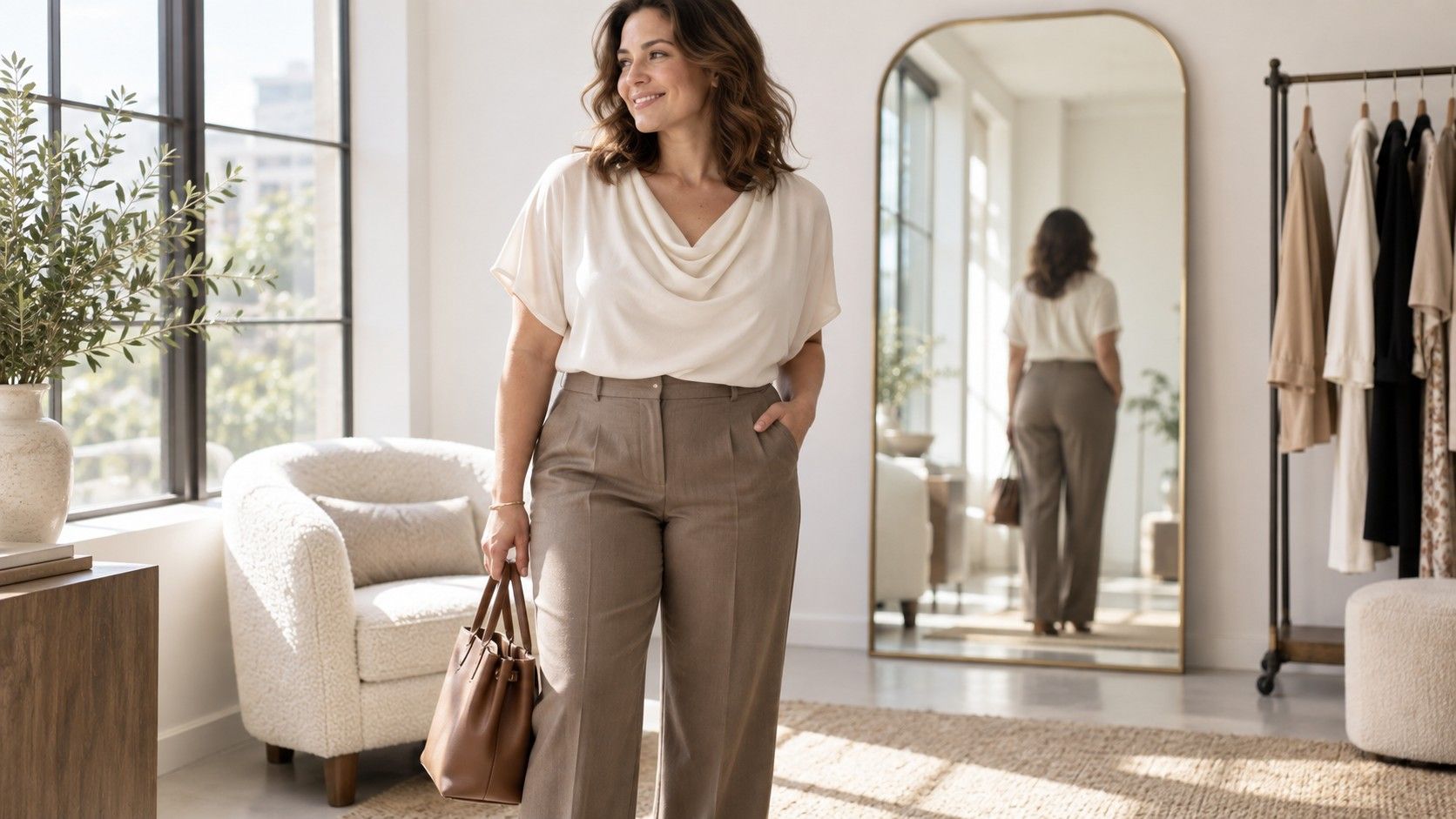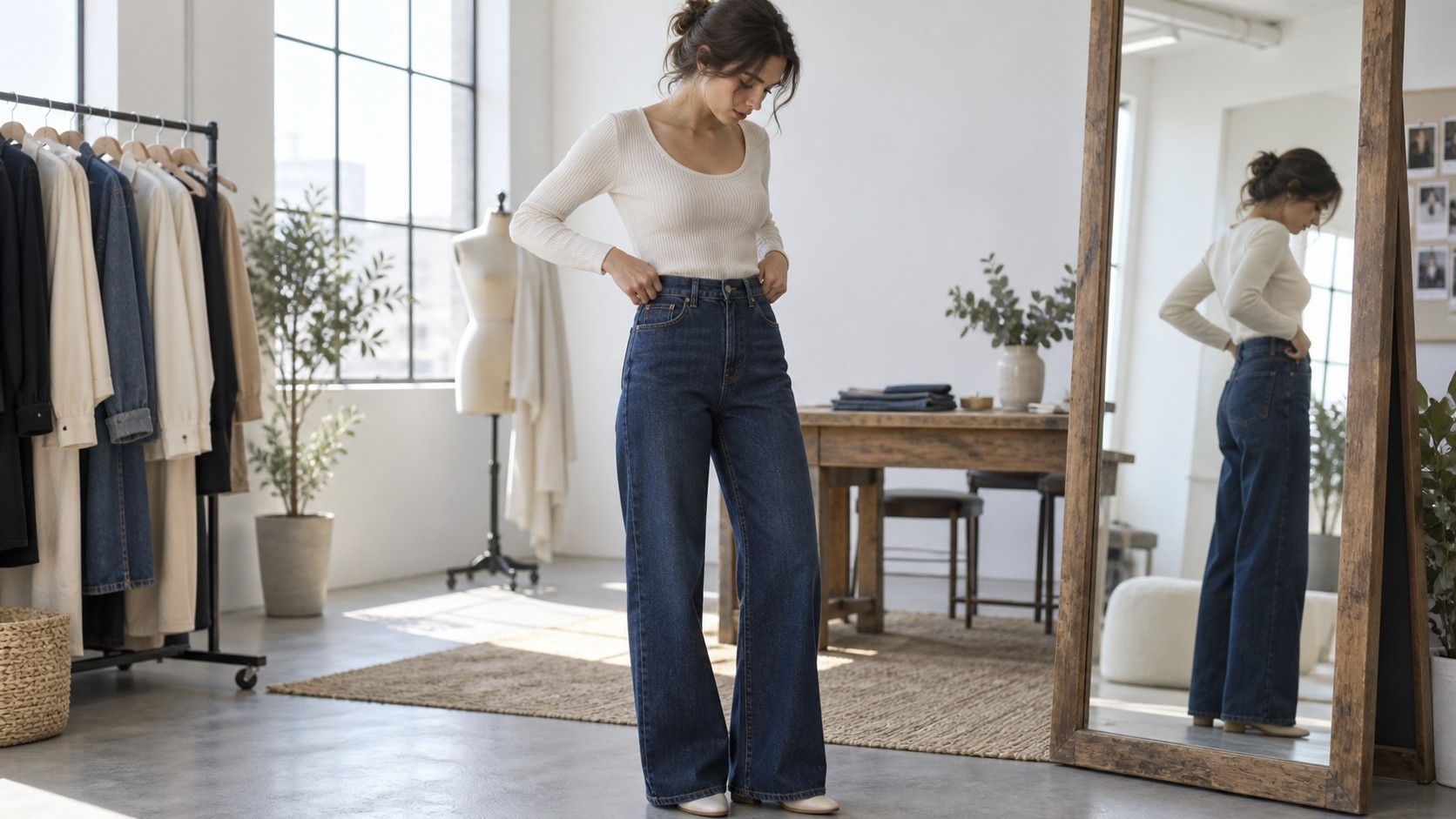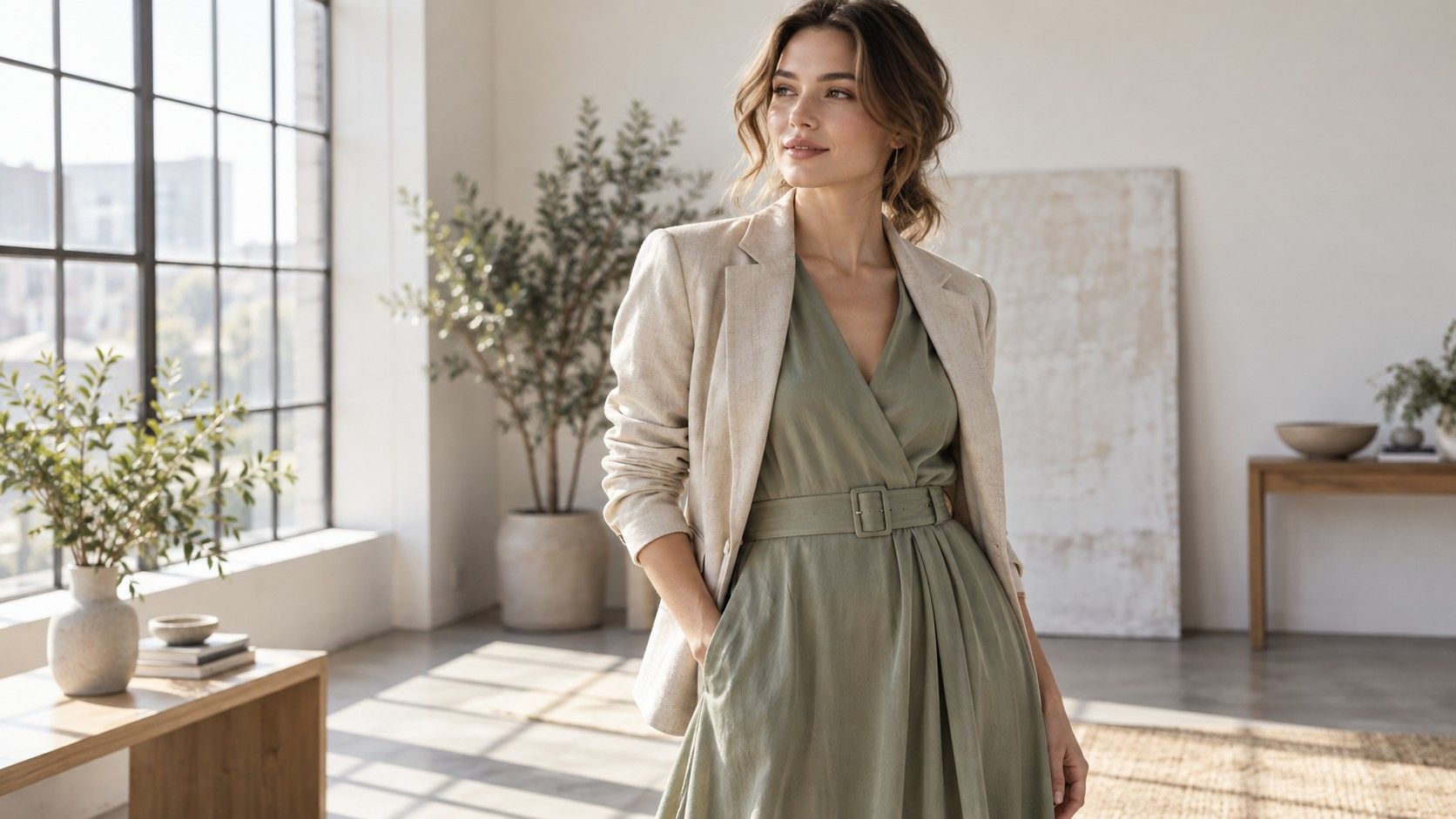
An hourglass body shape is usually described as balanced shoulders and hips with visible waist definition, but that description is only the beginning. The clothes that feel best depend on torso length, bust fit, fabric, height, and how much shaping you actually enjoy wearing. This guide uses the hourglass idea as a practical filter, not a list of rules designed to make everyone look the same.
Recognise the fit pattern before shopping by shape
Many people with an hourglass frame notice the same ready-to-wear problem: a garment has enough room through bust or hips but floats at the waist. A sheath dress may fit at both ends yet need alteration in the middle. High-rise trousers can feel secure and balanced, while a low rise cuts across the torso at an awkward point. These are fit clues, not obligations to wear bodycon clothing.
Choose silhouettes that follow, rather than fight, your waist
Balance in the shoulders and hips can be visual rather than numerical. A fuller bust may make the upper body seem wider even when shoulder width is moderate. Curvier hips may need extra ease in woven trousers while the overall outline still looks even. Start by identifying what the garment must accommodate: bust volume, hip room, a defined waist, or all three.
Use outerwear to keep the middle of the outfit clear
It also helps to separate “fitted” from “shaped.” A tailored shirt with a gentle dart can acknowledge the waist without clinging. A knit dress with a belt can create a line without the compression of a bandage dress. When people ask how to dress an hourglass shape, they often need that distinction more than another list of approved silhouettes.
Clothes with some waist awareness tend to be easy starting points: wrap tops, princess seams, softly belted shirt dresses, peplum shapes, and jackets with light shaping through the middle. The waist detail should land at your natural waist, not at the narrowest point on a generic size chart. On a short torso, a seam placed too high can make the bust feel crowded; on a long torso, a high empire line may look disconnected from the body beneath it.
Try the garment sitting down as well as standing. A belt that looks clean in a mirror can twist or press when you sit at a desk. A wrap top can gap at the bust if the overlap is too shallow. These are construction issues, not signs that the shape is wrong for you. A small snap, a camisole, or a different wrap angle can make a favourite cut far more wearable.
Boxy pieces are not forbidden. A straight overshirt or oversized blazer can be a useful contrast when the fabric has drape or the layer is worn open. The question is whether the item creates deliberate ease or simply adds bulk at the waist. Looking at the side view is helpful here; a garment may appear balanced from the front but project too far because of thick pockets or stiff fabric.
| Garment | Helpful detail to test | Common fit issue |
|---|---|---|
| Wrap dress | Wrap point meets the natural waist | Shallow overlap gaps at the bust |
| High-rise trousers | Waistband follows the waist without digging | Hip fit creates a gap at the back waist |
| Fitted blazer | Waist suppression is light and comfortable | Buttons pull across bust or hips |
| Knit top | Medium weight skims rather than clings | Thin jersey catches on bra or waistband lines |
| Belted coat | Belt sits where your torso naturally narrows | Fixed belt is too high or too low |
Dresses and separates that are easy to adjust
A wrap dress is popular for an hourglass body shape because it can connect bust, waist, and hip in one move, but it is not the only option. Fit-and-flare dresses offer room through the lower body without losing the waist. Shirt dresses work well when the button placket lies flat and the belt is adjustable. A column dress can also work beautifully when it has darts, a seam, or a fabric that allows movement rather than relying on stretch alone.
With separates, look for a clear relationship between top and bottom. A tucked or half-tucked blouse can make the waist visible, but a cropped knit that ends exactly at the waistband can do the same with less fuss. High-rise trousers, straight jeans, and A-line skirts give a defined place for a top to meet the lower half. If wide-leg trousers make you feel swamped, test a shorter top or a more substantial shoe before rejecting the leg shape.
Pay attention to fabric weight. Thin, clingy knits often show every transition between bra, waist, and trouser, which can feel fussy even on an otherwise good cut. A medium-weight ponte, cotton poplin, crepe, denim, or rib knit tends to hold a cleaner line. On the other hand, very stiff fabric can stand away from the waist and make a tailored garment feel larger than it is. The best choice is often a fabric with enough body to skim and enough give to move.
Jacket length has an outsized effect on hourglass proportions. A cropped jacket that ends near the natural waist can make the legs look longer, but only if it does not stop at the fullest point of the bust. A blazer ending at the upper hip often works because it frames the waist while giving enough coverage through the seat. Longer coats can look streamlined when they have a belt, vertical opening, or subtle shaping through the side seams.
Try layers open and closed. An open blazer creates vertical lines that may feel less restrictive than a buttoned one. A double-breasted jacket can be elegant, but the extra front layers and button placement need enough room for the bust. When the buttons pull, sizing up may solve the bust while losing the waist; a different cut or a simple alteration is usually more successful than forcing the garment to do both jobs badly.
Outerwear does not need to advertise the waist at all times. A relaxed trench, an unstructured cardigan, or a straight wool coat can be the right choice for weather, comfort, or mood. The useful check is whether the shoulders fit and whether there is enough movement through hips and arms. Proportion is one consideration among many, especially when you are carrying a bag, cycling, commuting, or layering over knitwear.
Fit checks that prevent expensive mistakes
When trying on a dress, raise both arms, sit, take a few steps, and look at the back waist. The seam should not climb above your natural waist or pull horizontally across the bust. With trousers, sit on a bench or low chair; the waistband should stay in place without a sharp gap at the back. Check pockets, zips, and pleats as well. They can add bulk exactly where a clean line would feel more comfortable.
For tops and blazers, inspect shoulder seams first. They should end close to the shoulder point, not drift down the arm because you sized up for the bust. Then check the buttons. A small diagonal pull is often a sign that the garment needs more bust ease, not that you should avoid shirts. Look for styles with darts, stretch panels, or a fuller cut through the front.
Bring the shoes you wear most often when buying longer trousers or dresses. Hem length changes the balance of a wide leg and the point where a midi skirt cuts the calf. A mirror photo from the front and side, taken after you have moved around, is more useful than the first posed fitting-room photo.
Build hourglass body shape outfits around preference, not correction
There is no need to “show off” a waist every day. Some days a fitted knit and high-rise jeans feel right; other days a loose shirt, straight trousers, and trainers are the better outfit. The hourglass framework can help you predict fit, but it should not turn comfort into a failure of styling. If a straight dress feels good, wear the straight dress.
A simple wardrobe formula is to keep a few adjustable pieces on hand: a wrap or belted dress, high-rise trousers with a reliable waistband, a shaped blazer, a medium-weight knit, and an outer layer with enough hip room. Then vary colour, texture, and accessories according to your taste. A belt, neckline, jacket, or tuck is a dial you can turn, not a compulsory correction.
The most dependable outfits are usually the ones where you stop noticing the fit after ten minutes. They let you sit, walk, eat, work, and move without tugging at a waistband or checking a neckline. That is a better definition of balance than any body-shape rule.