A longer torso with shorter-looking legs can make ordinary clothes feel strangely out of scale. A tunic may swallow the hip area, a low-rise jean may pull the eye downward, and even a beautiful coat can seem to have landed at the wrong point. The aim is not to manufacture longer legs or follow a strict body-shape rulebook. It is to choose waistlines, hems and layers that make the whole outfit feel more settled.
Confirm the proportion before changing your wardrobe
Start in close-fitting clothes, barefoot if possible. Notice where your natural waist falls, where your hip starts, and how much of the body is visible above and below that point. A long torso often shows up as extra distance from ribcage to hip, while the inseam seems short in comparison. Height is not a reliable clue; a tall person can have this proportion, as can someone petite.
Build a longer leg line with the right waist placement
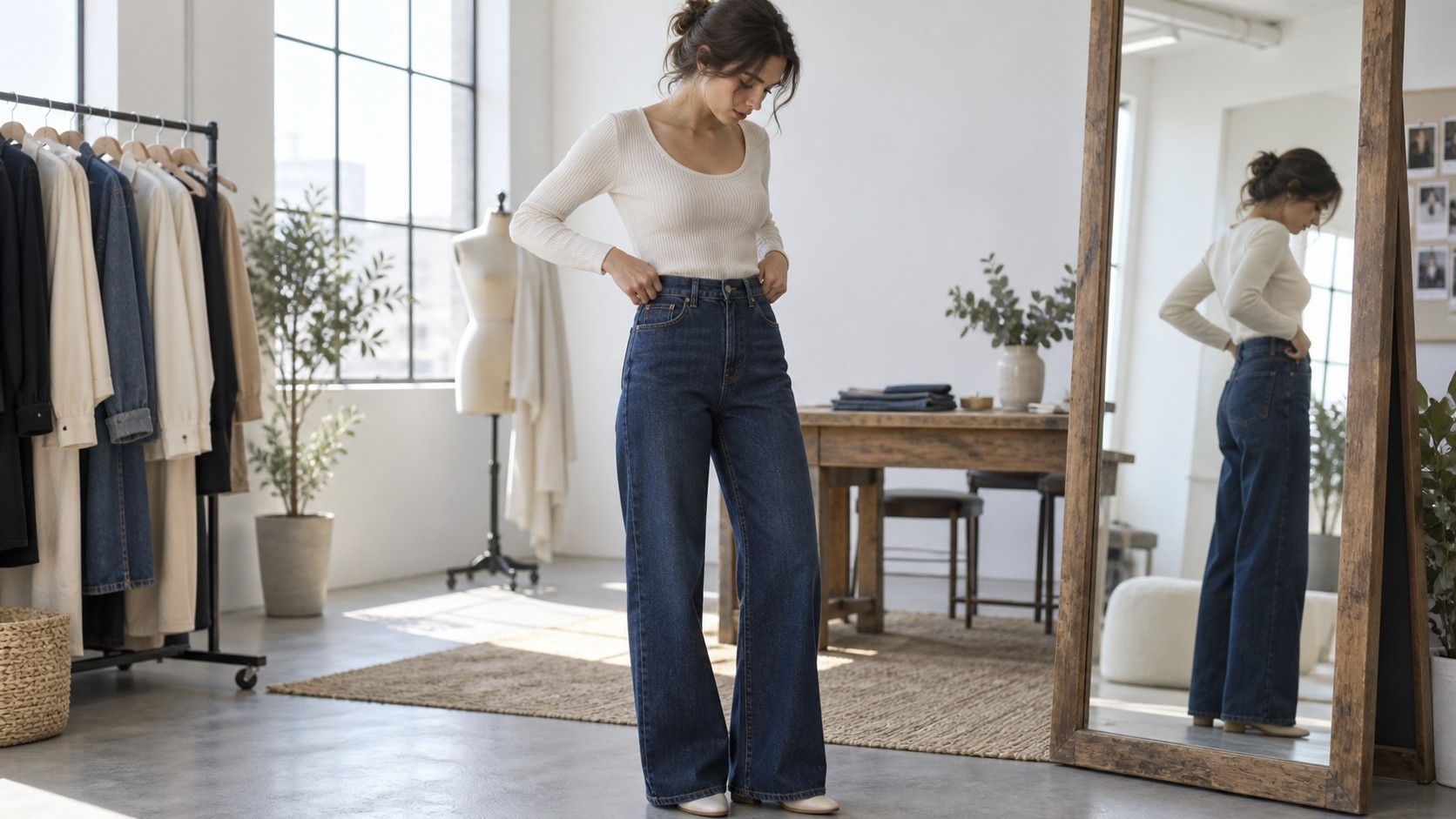
Take one front-facing photo from a few feet away with the camera near waist height. Then repeat it in a lower-rise pair of jeans and a higher-rise pair. This is more useful than staring at a mirror from too close, where perspective exaggerates the legs. Keep your feet parallel and avoid the familiar hip pop that changes the line of the body.
Keep tops and jackets from covering the useful part of the outfit
Also separate proportion from fit problems. Trousers that are too long and pooled at the ankle, a jacket with dropped shoulders, or a top that has stretched out can make any outfit look unbalanced. The best starting point is a garment that fits well through the waist, hip and shoulder.
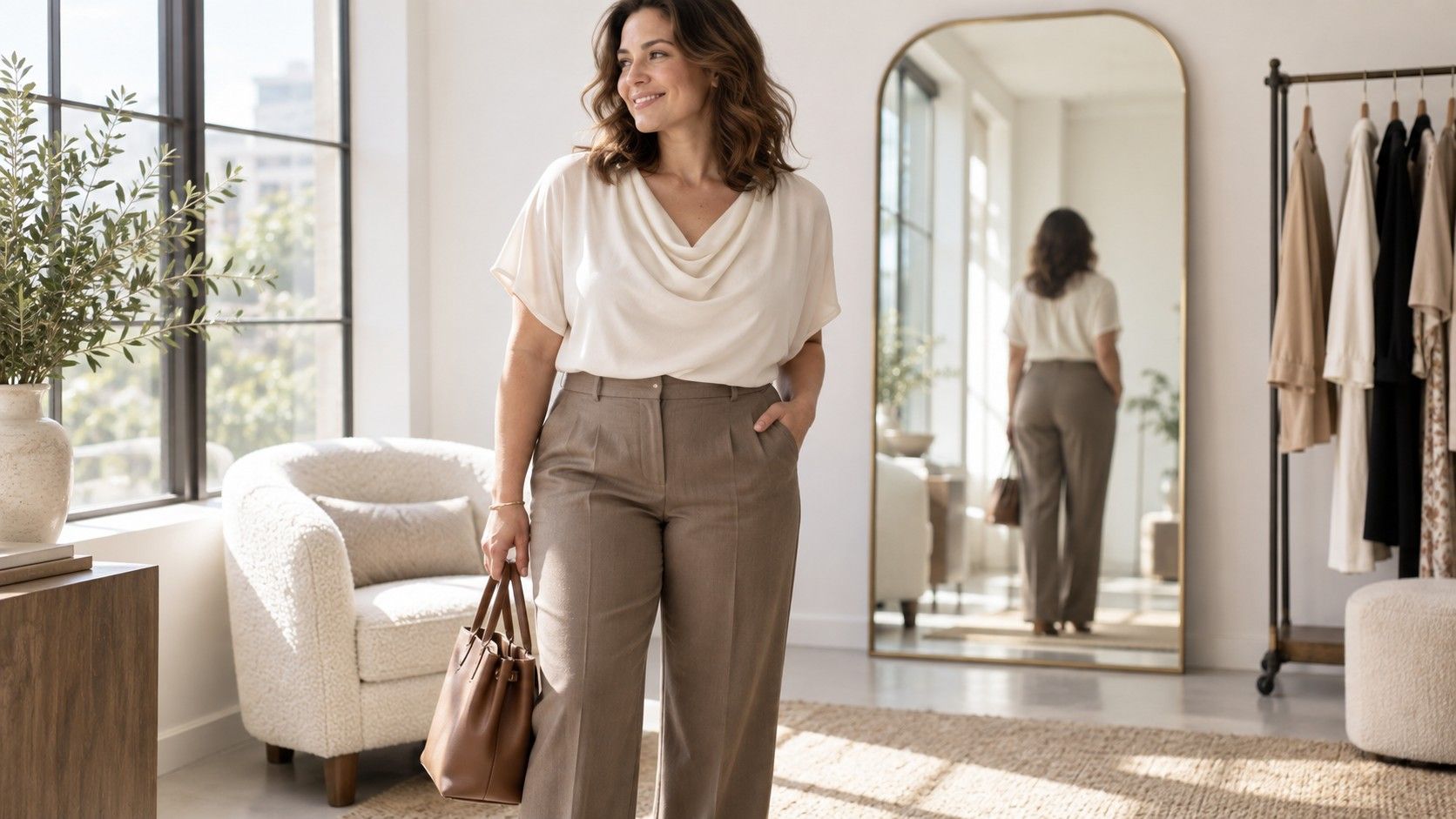
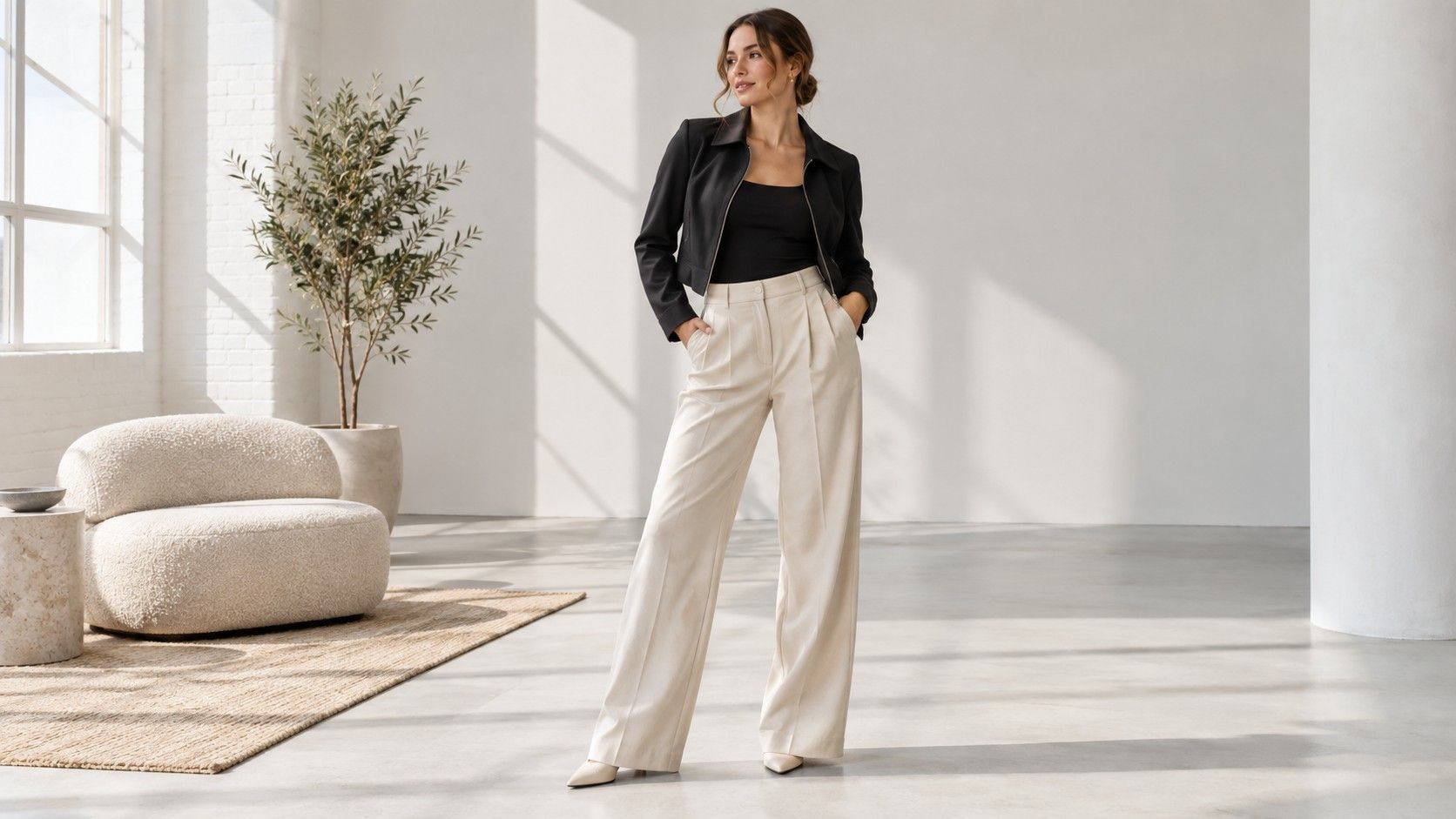
High-rise trousers are popular for this proportion because they move the visible start of the leg upward. The useful version sits at or just above the natural waist, not so high that it presses into the ribs when you sit. A firm waistband with a little shaping through the front can make a tucked top look neat without creating a harsh horizontal cut.
A full tuck works well when the top is thin enough to lie smoothly. With a heavier knit or a roomy shirt, a partial tuck or a gentle blouse-over is often more believable. Pulling thick fabric tightly into a waistband creates bulk at the stomach and can make the intended leg line disappear.
| Outfit detail | Why it can help | What to watch for |
|---|---|---|
| Natural high-rise trousers | Raises the visual starting point of the legs | A waistband that digs in will ruin comfort |
| Monochrome trousers and shoes | Makes the lower half read as one continuous line | Match the depth of colour, not necessarily the exact shade |
| Shorter, high-hip layer | Stops a jacket from extending over the leg line | A very boxy crop can widen the middle |
| Pointed or almond-toe shoe | Adds a little direction at the end of the leg | Choose toe shape for comfort, not obligation |
Belts deserve a quick test. A belt that matches the trouser colour lets the waist read as part of the lower half. A high-contrast belt can be stylish, but it creates a distinct visual stop. If a look feels chopped in two, try the same outfit with no belt or with one closer in colour to the trousers.
Long untucked tops are the usual culprit when someone says their legs look shorter in clothes than they do in swimwear or gym wear. A hem that reaches the fullest point of the hip draws the eye to the lowest part of the torso. Instead, test tops that end near the waistband, can be tucked easily, or have a curved hem that reveals the front of the hip.
This does not require cropped tops. A regular-length shirt worn with a full or half tuck often does the job. A fine-gauge sweater can be folded under at the waistband, and a relaxed T-shirt can be tucked just at the front. The difference is less about exposing skin than about showing where the leg line begins.
For outer layers, aim for a hem at the waist or upper hip when you want a compact, leg-forward silhouette. A blazer that is slightly fitted and left open creates two vertical lines through the torso. Longer coats are still excellent; just make sure the inner outfit has a visible waist or a continuous colour line so the coat does not become the only shape in view.
Choose skirts and dresses by where the eye lands
High-waisted skirts can be one of the easiest options because they establish the leg line without any trouser fit issue. An A-line skirt with a clean waistband, a softly pleated midi, or a straight skirt with a front slit can all work. The best length is the one that allows a clear break at the waist and does not bunch around the calves.
In dresses, look first at the waist seam. A wrap dress tied at the natural waist, a fit-and-flare dress with a raised waist, or a shirt dress that can be belted slightly higher often makes the proportion feel deliberate. A low drop waist can be fun, but it usually lengthens the torso visually, so it is best chosen for the silhouette rather than as a balancing tool.
Print placement changes the effect. A dress with a busy pattern all the way down can be easy and flattering, while a large dark panel across the lower torso can hold the eye there. If you are trying a colour-blocked dress, make the lower section slightly darker or more continuous with tights and shoes. The transition feels quieter.
Use shoes and hem lengths as a supporting detail
Shoes cannot change your anatomy, but they can avoid interrupting the line you have already built. With dark ankle trousers, dark loafers or boots keep the lower half continuous. With bare ankles and a light skirt, a nude-for-you sandal or a low-vamp shoe can extend the visual line of the foot without requiring a heel.
Hem placement matters more than fashionable labels. A cropped trouser that ends at the narrowest part of the ankle can look crisp. One that ends at the widest part of the calf can make the leg feel abruptly cut off. In a fitting room, roll or pin the hem by an inch and look again before deciding a pair of trousers is simply not for you.
Wide-leg trousers work beautifully when the rise is high and the hem nearly skims the shoe. If they are too long, the fabric bunches and shortens the line; if they are too short, the ankle gap can look accidental. Straight-leg jeans are often the easiest everyday middle ground because they keep a clean vertical shape without needing much styling effort.
Do not overdo contrast at the middle
Long-torso styling gets difficult when every garment draws a line across the middle: a contrasting belt, a short boxy jacket, a horizontal stripe, and a different-coloured shoe. Any one of those can be appealing. Together, they make the torso the busiest part of the outfit and reduce the sense of length below it.
Choose one focal point. If you love a contrasting belt, let the shoes relate to the trousers. If you want bright trainers, keep the waistline simple. Vertical details above the waist, such as an open collar, a button placket, or a long necklace, can also add interest without fighting the leg line.
Texture is a softer alternative to colour contrast. A ribbed knit tucked into smooth trousers, a denim jacket over a jersey dress, or suede shoes with wool trousers create depth without slicing the body into blocks. This is useful when you dislike the idea of dressing in one colour from waist to toe.
Use a movement test before keeping an outfit
Stand in front of a mirror, then sit, climb a step, and reach for a shelf. High-rise trousers should not fold sharply under the bust, and a tucked top should not pull loose the moment you move. The most balanced-looking outfit is not worth much if you spend the day pulling it down or tucking it back in.
Photograph the look from the front and side in natural light. Ask a simple question: where does the eye pause first? If it lands on a tight waistband, a long top hem, or a sharp contrast belt, change only that element. Tiny adjustments usually work better than rebuilding the whole outfit around a proportion.
Once you know a few reliable combinations, repeat them. High-rise straight jeans with a tucked knit, a belted shirt dress, or ankle trousers with matching shoes are not tricks; they are useful formulas. They leave enough room to choose clothes for colour, weather and personal taste, which is the part of getting dressed that should remain enjoyable.