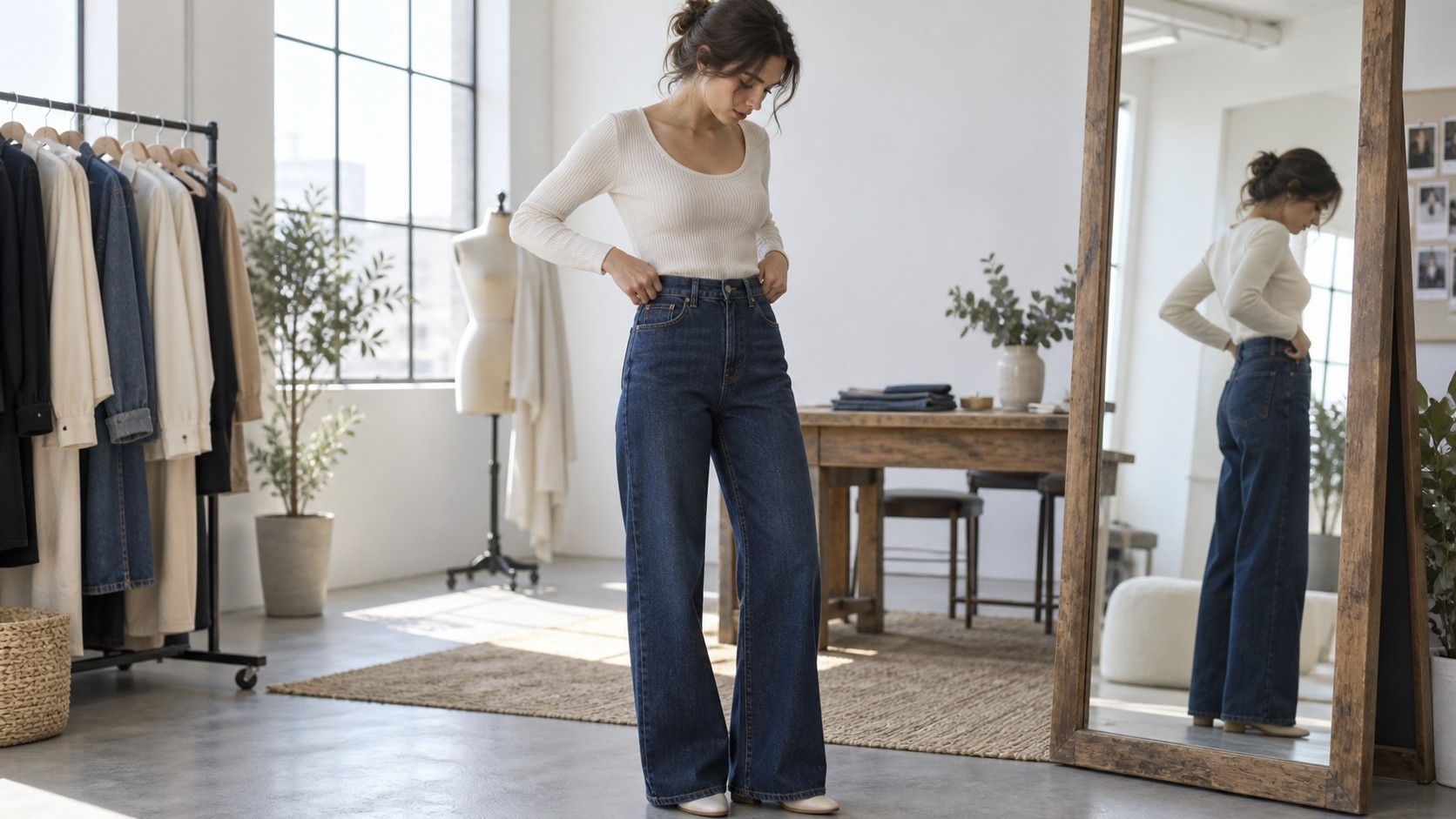
A capsule wardrobe for body shape should make getting dressed easier, not turn your closet into a strict uniform. The point is to keep pieces that work together, fit your current body, and suit the places you actually go. Body shape can help you spot useful proportions, but comfort, fabric, and your routine are what make the wardrobe last past the first enthusiastic tidy-up.
Use body shape as one input, not the whole plan
Start by separating observation from judgment. You may notice that fitted waist seams make you feel balanced, that straight-leg trousers give you room through the thigh, or that cropped jackets are easier with high-rise bottoms. Those are useful clues. They do not mean every item must follow one silhouette. A good capsule has enough variety for weather, work, and the occasional day when you simply do not want a waistband pressing on you.
Audit the clothes that already earn their place
Think in proportions instead of categories such as “allowed” and “forbidden.” If you like a longer torso line, you might pair a mid-rise trouser with an untucked knit. If you prefer a clearer waist, a tucked shirt or belted outer layer can provide it. The aim is to collect clothes that suit my body shape in ways you can repeat, not to purchase a new identity every season.
Choose repeatable silhouettes before individual trends
Pull out the pieces you wore at least three times in the last few months. Put them on rather than relying on memory. Check the shoulder seam, waist, rise, sleeve length, and the amount of room you have when sitting. A favourite jumper may be loved because its neckline frames your face, while a favourite trouser may work because the rise stays put on a long walk. Write down these specific details before you shop for anything.
Then make three piles: reliable, needs a small fix, and not worth forcing. A reliable item fits now and works with at least two other pieces. A small fix might be hemming trousers, replacing a button, or taking in a waist that is otherwise perfect. The final pile includes clothes that need constant adjustment, pinch at the ribs, or only work in a fantasy version of your week. Keeping them “just in case” makes outfit decisions slower.
Body shape wardrobe essentials are most useful when they repeat a few successful lines. You may choose one straight or gently tapered trouser, one wider leg, a skirt shape you can walk in, and dresses with a waist seam that lands well. For tops, perhaps a relaxed shirt, a fine knit, and a structured layer all work with the same bottoms. The exact count matters less than being able to combine the pieces without needing a special workaround.
| Wardrobe area | Useful question | Practical example |
|---|---|---|
| Trousers | Does the rise stay comfortable when seated? | Keep one darker straight leg for work and one softer wide leg for relaxed days. |
| Tops | Does the neckline work with your usual bra and jewellery? | Choose two neck shapes you already wear without adjusting. |
| Knitwear | Where does the hem end with your preferred bottoms? | Mix one cropped layer with one longer, easy layer. |
| Outerwear | Can it fit over your thickest everyday knit? | Use a blazer or jacket that keeps a useful shoulder and waist line. |
| Dresses | Can you walk, sit, and add a layer without fuss? | Keep one easy day dress and one more polished option with reliable support. |
Repeatable silhouettes save money because they make a shopping list clearer. If a new blouse only works with one skirt you rarely wear, it is not a capsule piece yet. If a new cardigan works over your two dresses, with both trousers, and under your coat, it probably has a job. This is not a demand that every garment match every other garment; it is a way to avoid accumulating beautiful orphans.
Build outfit formulas for the life you actually have
An outfit formula is a simple combination you can return to when you are busy. It might be straight trousers, a fitted or semi-fitted knit, and a jacket; a fluid midi skirt, tucked tee, and short cardigan; or a shirt dress with boots and a long coat. Write down four or five formulas after trying them on. Include the shoes, because an outfit that only works barefoot in the bedroom is not fully solved.
Give each formula a setting: desk day, errands, dinner, travel, or a weekend walk. This exposes gaps honestly. Many closets contain several almost-identical “nice tops” but no layer that works over them in cold weather. Others have trousers that look good standing but are uncomfortable for a commute. Your capsule should support the rhythm of your week, including laundry days and weather changes, rather than a single polished photo.
Use colour and fabric to make combinations easier
Choose a small group of colours you already enjoy wearing near your face. Neutrals can make mixing simple, but they do not have to be black, beige, and white. Navy, olive, denim blue, chocolate, grey, or a muted berry can all serve as anchors. Add one or two colours that make you happy, then check whether they work with your coats and shoes. The easiest palette is one you will not tire of after a month.
Fabric deserves a place on the list too. A capsule filled with delicate pieces can be impractical if you need to wash clothes often. A crisp shirt may look smart but feel too stiff for your workday; a soft knit may pill if it rubs under a bag strap. Notice drape, opacity, and temperature. Clothes that suit your body shape are easier to wear when the material cooperates with your daily movement and climate.
Plan alterations and replacements instead of chasing perfection
Alterations are often the difference between an almost-right piece and a reliable one. Hemming a trouser so it meets your favourite shoe, shortening a sleeve, or adjusting a waist can improve the proportions of an outfit more than buying another similar item. Set a modest repair budget and handle the pieces you already love first. Do not alter something that is uncomfortable in several places; tailoring has limits, and your closet does not need rescuing at any cost.
For replacements, keep a running note on your phone. When a reliable white tee becomes thin, or your everyday trousers start to bag at the knee, record the qualities you want to replace: fabric weight, rise, inseam, neckline, pocket placement. This turns a vague shopping trip into a focused search. It also helps you avoid buying a trend item simply because you have forgotten what your wardrobe is missing.
Refresh the capsule when your needs change
A capsule wardrobe is not a promise to own the same number of things forever. Bodies change, jobs change, and a move to a different climate can make former staples irrelevant. Revisit the wardrobe at the start of a season and after any practical shift in your routine. Try on the key pieces, check for repairs, and remove only what is truly no longer serving you.
Keep the process kind and specific. Instead of deciding that a garment “does not flatter,” identify the real issue: the neckline feels too tight, the waist seam sits too high, the fabric is too warm, or the colour is not one you reach for. That level of detail makes the next choice easier. A successful capsule wardrobe grows from repeated evidence about fit and use, leaving enough room for personality, surprise, and the clothes you simply enjoy wearing.