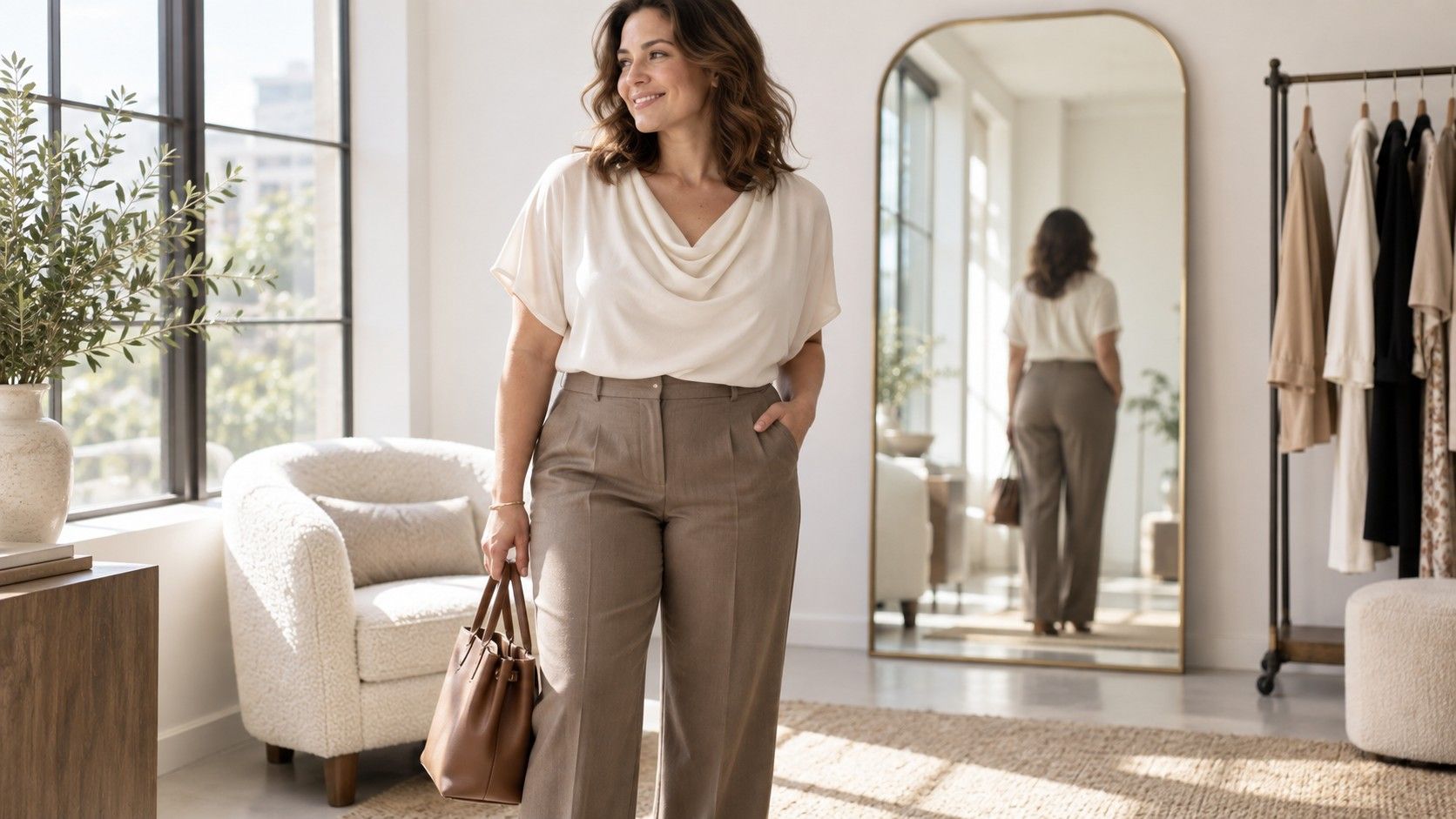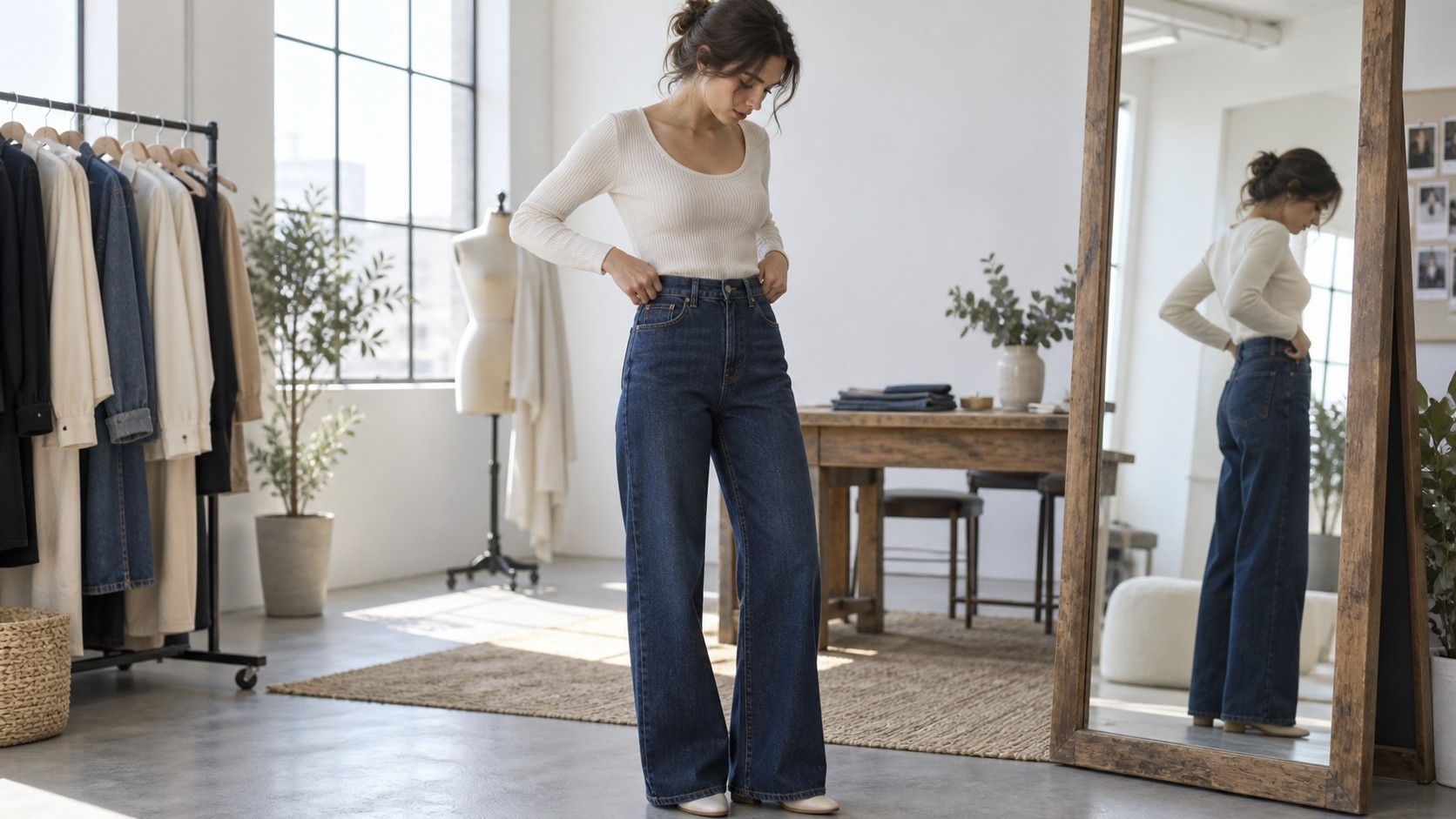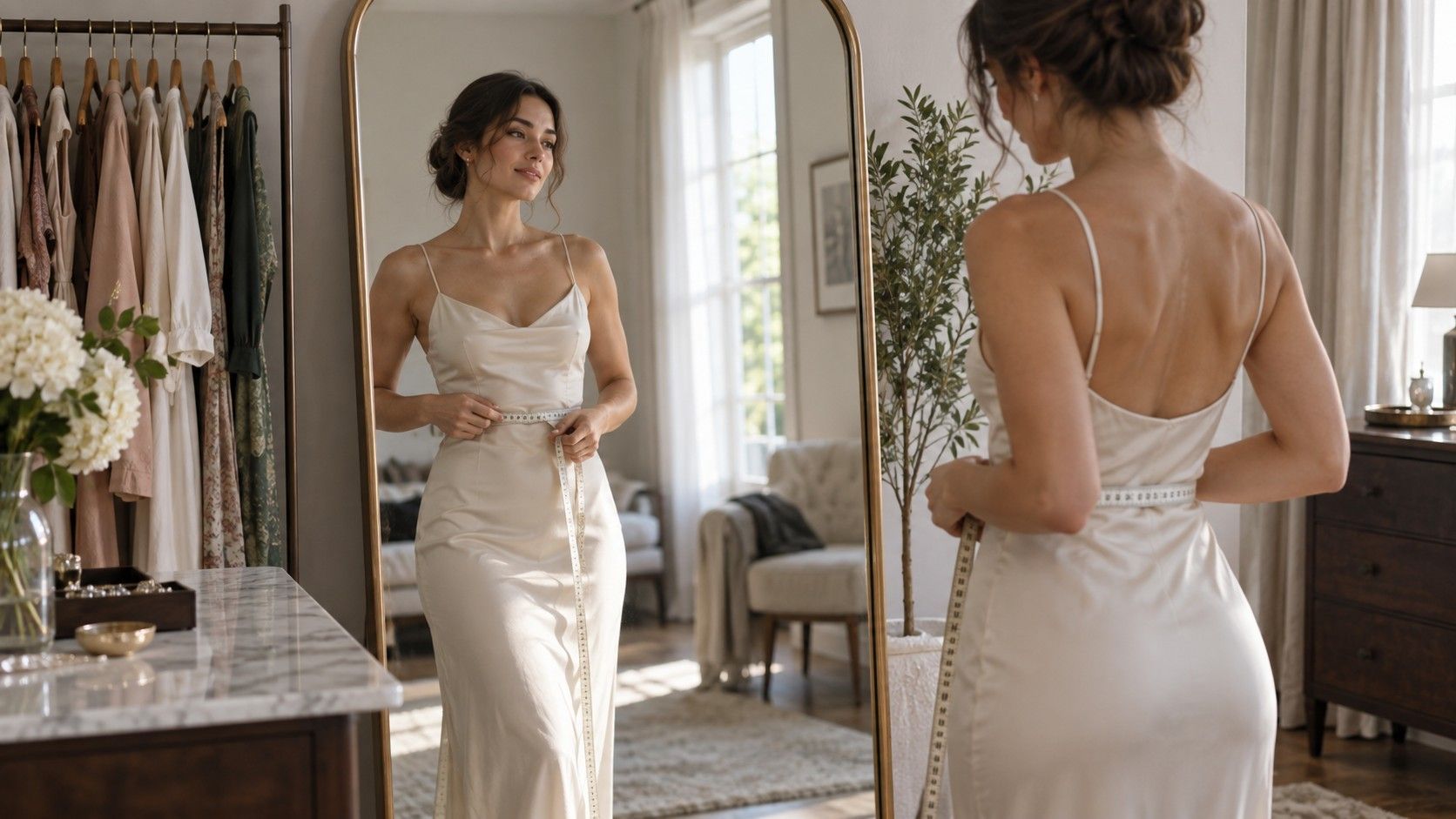
A body shape quiz can be a useful shortcut when it asks the right things. The unhelpful versions demand one perfect answer from a body that has more than one proportion; the better version combines measurements with the way clothes fit and leaves room for a mixed result. You are not trying to pass a test. You are gathering clues that make shopping and getting dressed less frustrating.
Why quick quizzes so often give confusing answers
Many online quizzes rely on a single question: “Are your hips wider than your bust?” That can miss the role of shoulders, waist placement, torso length, and posture. Someone may have hips that are a little wider than their bust, yet still experience most fit issues through broad shoulders. Another person may measure close to a rectangle but have enough waist definition that belted clothes feel much better than straight cuts.
Start with the questions that reveal real proportions
Photos can add another layer of confusion. A camera held low exaggerates hips; a hand on one hip changes the outline; oversized clothing removes the waist entirely. Lighting and pose are not measurements. If a quiz result changes every time you look at a different photo, it is a sign to use the mirror and tape measure instead of trusting the picture.
Use measurements to check, not overrule, your first impression
A useful body type quiz with measurements should end with a working description, not a command. “Balanced shoulders and hips with a defined waist” tells you more than a dramatic label. It also makes it easier to test clothing choices without feeling that one garment can disprove the whole result.
Answer the visual questions before reaching for the tape. Stand in close-fitting clothes, arms relaxed, a few steps from a mirror. Ask where your body appears widest: shoulders, bust, hips, or roughly the same across the frame. Then look for the waist. Is there a visible inward curve from bust or ribs to hip? Does a belt naturally settle in one place, or does it slide because the torso is straighter?
Next, think about familiar clothing situations. When you buy a blazer, do the shoulders fit before the body does, or do the buttons pull at the bust? With trousers, does the waistband gap after the hips fit, or do you need the same size from waist to thigh? These are practical questions because they describe the points where standard patterns meet your body.
Do not make the result depend on whether you feel “curvy,” “straight,” or “athletic.” Those words carry a lot of personal meaning and very little consistency. Replace them with observations such as “shoulders read wider than hips” or “waist is smaller than both bust and hip.” They are easier to test in a fitting room and less likely to send you toward a style rule you do not even like.
Measure the fullest part of the bust, the natural waist, and the fullest part of the hips with a soft tape held parallel to the floor. If possible, also note shoulder width from outer shoulder point to outer shoulder point. Take each number twice while breathing normally. Tightening the tape, holding your stomach in, or measuring over a bulky top creates false differences that can push a quiz toward the wrong answer.
Look for patterns rather than a magic ratio. Similar bust and hip measurements with a substantially smaller waist often support an hourglass-like outline. Hips with more visual and numerical width than the upper body may support a pear or triangle starting point. A stronger shoulder line with relatively narrower hips can suggest an inverted triangle. When the main measurements are close and the waist is less pronounced, rectangle can be a useful fit description.
| If you notice this | A useful quiz direction | What to check next |
|---|---|---|
| Shoulders and hips look balanced; waist is clearly smaller | Hourglass-like balance | Where fitted waist seams land |
| Hips carry more width than shoulders or bust | Pear or triangle | Hip room, pocket pull, waistband gap |
| Shoulders look strongest across the frame | Inverted triangle | Sleeve seams, neckline, trouser volume |
| Measurements and outline are fairly even | Rectangle or straight balance | Whether shaping comes from cut or fabric |
| Midsection is the fullest visual area | Oval or apple-like balance | Comfort at the waist and vertical ease |
These directions are deliberately broad. A tape measure cannot tell you whether a blazer is too long, whether a high rise feels comfortable, or whether a fabric clings in a way you dislike. It supplies a check against visual guesswork; it does not get the final word.
How to interpret a mixed or borderline result
Mixed results are common and do not mean you measured incorrectly. You might have shoulders and hips that appear balanced, a waist that is defined from the front but less obvious from the side, and a full bust that changes how tops fit. In that case, one label will not capture every clothing decision. Use two notes: one for overall balance and one for the fit issue that appears most often.
For example, “hourglass proportions with a short torso” suggests testing waist placement carefully. “Triangle balance with broad shoulders” may mean that neither a strict pear guide nor a strict inverted-triangle guide feels complete. A person with a straight outline can still prefer waist definition; another person with a sharply defined waist may dislike fitted clothing. The quiz is there to generate useful experiments, not to replace taste.
If your measurements differ by only a small amount, step back from the tape. Compare full-length mirror photos taken in the same neutral outfit, with the camera at waist or chest height. Then look at the seams and silhouettes that repeatedly work. Small numerical gaps usually matter less than a jacket length, a trouser rise, or the amount of structure in a fabric.
Make self-assessment more reliable at home
Choose a quiet ten minutes rather than trying to answer questions while rushing to leave. Wear a simple fitted top and leggings, or another outfit that lets you see the shoulder line, waist, and hip area. Stand naturally. A posed stance can make almost anyone look more hourglass-shaped, while slouching can hide the waist and change the apparent shoulder width.
Write your answers in this order: visual outline first, then measurements, then fit notes. That sequence avoids letting a single number dominate the result. It also gives you something to revisit after you try clothes on. A notebook entry could be as simple as: “Shoulders slightly wider; waist defined in high-rise trousers; hips need room in rigid denim.” That is enough information to guide a shopping search.
Ask a trusted friend for help only if it makes the shoulder and back measurements easier. Their role is to keep the tape level, not to decide what your body should be called. If someone’s comments make the process feel critical, work alone. The best quiz result is one that leaves you with clearer options and a more comfortable relationship to your clothes.
Turn the quiz result into three small style experiments
Start with a top, a bottom, and a layering piece. For the top, test neckline and shoulder construction: a V-neck, scoop neck, crew neck, soft shoulder, or more defined shoulder seam. For the bottom, compare rise and leg shape before worrying about colour or trend. A straight leg, wide leg, and tapered leg can create very different balance even in the same fabric.
For the layer, compare lengths. A jacket ending at the natural waist, upper hip, or below the hip can shift the visual proportion more than a body-shape label suggests. Take quick photos in the same light and notice where the garment pulls or becomes bulky. The most informative image is usually the one where you forgot to pose.
Keep the experiments modest. You do not need to rebuild your wardrobe because a quiz points toward one category. The result should help you notice better cuts in the clothes you already own and make the next purchase more deliberate.
What to do when no label feels right
If you still cannot answer “what is my body shape” with confidence, use a proportion profile instead. Describe your shoulders, bust, waist, hips, torso, and the areas where ready-to-wear clothing gives you trouble. That profile is more personal and often more practical than a five-shape chart.
Try a few rules as optional tools, then keep only the ones that improve comfort or make outfits easier to compose. If a supposed guideline makes you feel disguised or restricted, it has failed its only useful purpose. Fit, ease of movement, and your own visual preference are allowed to outweigh the quiz result every time.